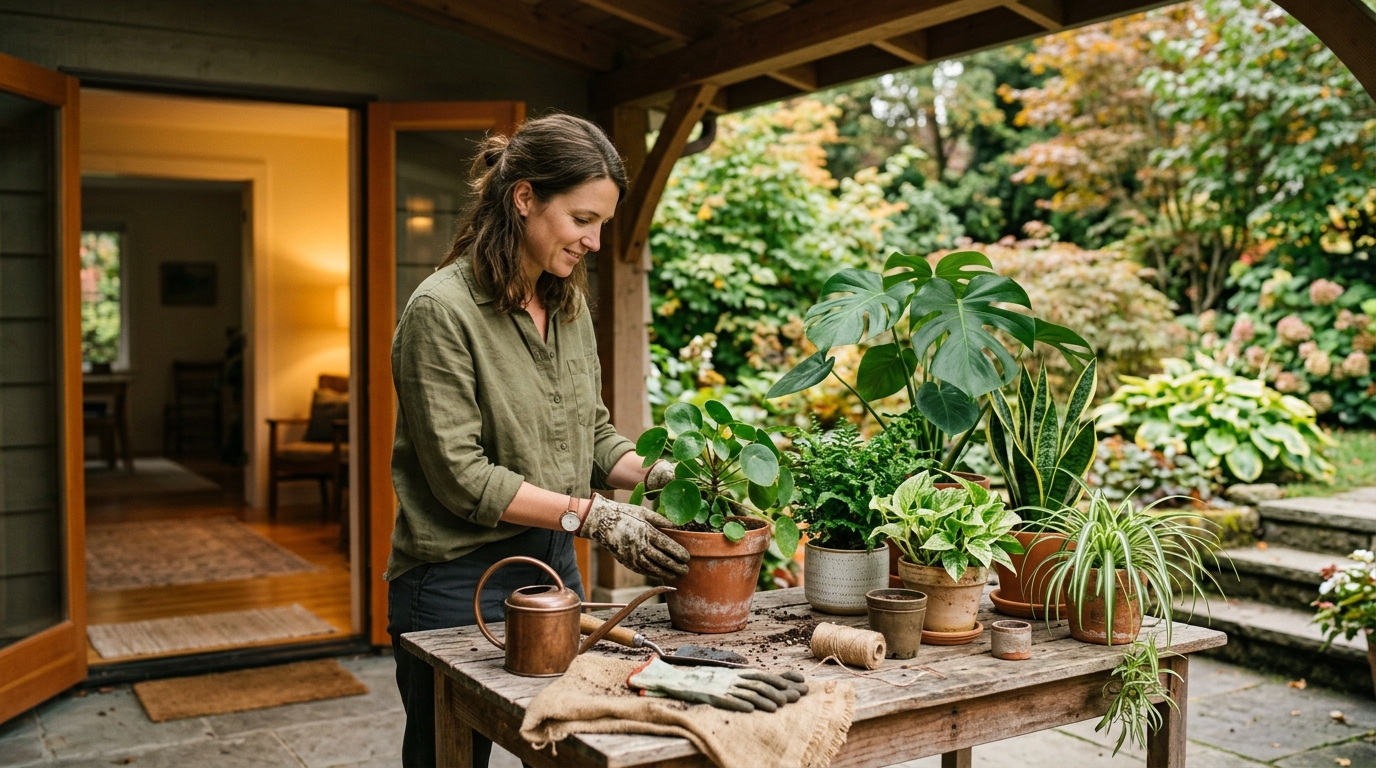
Bring patio plants in before cold nights, inspect every hiding place outdoors, rinse foliage, and quarantine the arrivals long enough to catch trouble before it spreads.
You do not need to turn fall plant-moving day into a chemical campaign. You need one deliberate pass before the plants cross the threshold: inspect them outdoors, rinse away what you can, and keep the arrivals separate long enough for missed pests to declare themselves. Iowa State’s guidance puts the quarantine window at three to four weeks—long enough to catch the usual indoor trouble before it joins your permanent collection.
The short version: bring tender plants in before nights settle near 50°F; inspect leaf undersides, stems, pot rims, and drainage holes outdoors; then quarantine the clean, dry plants away from your regular collection for three to four weeks. That sequence catches more problems than a frantic spray bottle after the fact.
Step 1: Bring plants in before cold stress makes the decision for you
Start with the forecast, not the first frost alert. University of Minnesota Extension says most houseplants need to come inside when temperatures move into the 40s and 50s, while Iowa State uses consistently cool nights around 50°F as the practical signal. Tropical foliage plants are not improved by a chilly night on the porch simply because the afternoon was pleasant.
Make a short triage list. Bring in the tender plants you intend to keep first: tropical foliage plants, orchids, succulents that cannot tolerate cold, and anything with sentimental or replacement value. Plants that are visibly declining, severely infested, or too large for the available indoor light deserve a separate decision. A bad candidate should not receive a free pass merely because it has survived summer.
Before moving anything, choose a quarantine spot. A bathroom with a window, a spare room, a utility room with bright indirect light, or one end of a room away from existing plants can work. The point is separation, not punishment. Do not crowd returnees on the same sill as your established collection and hope a quick look was enough.
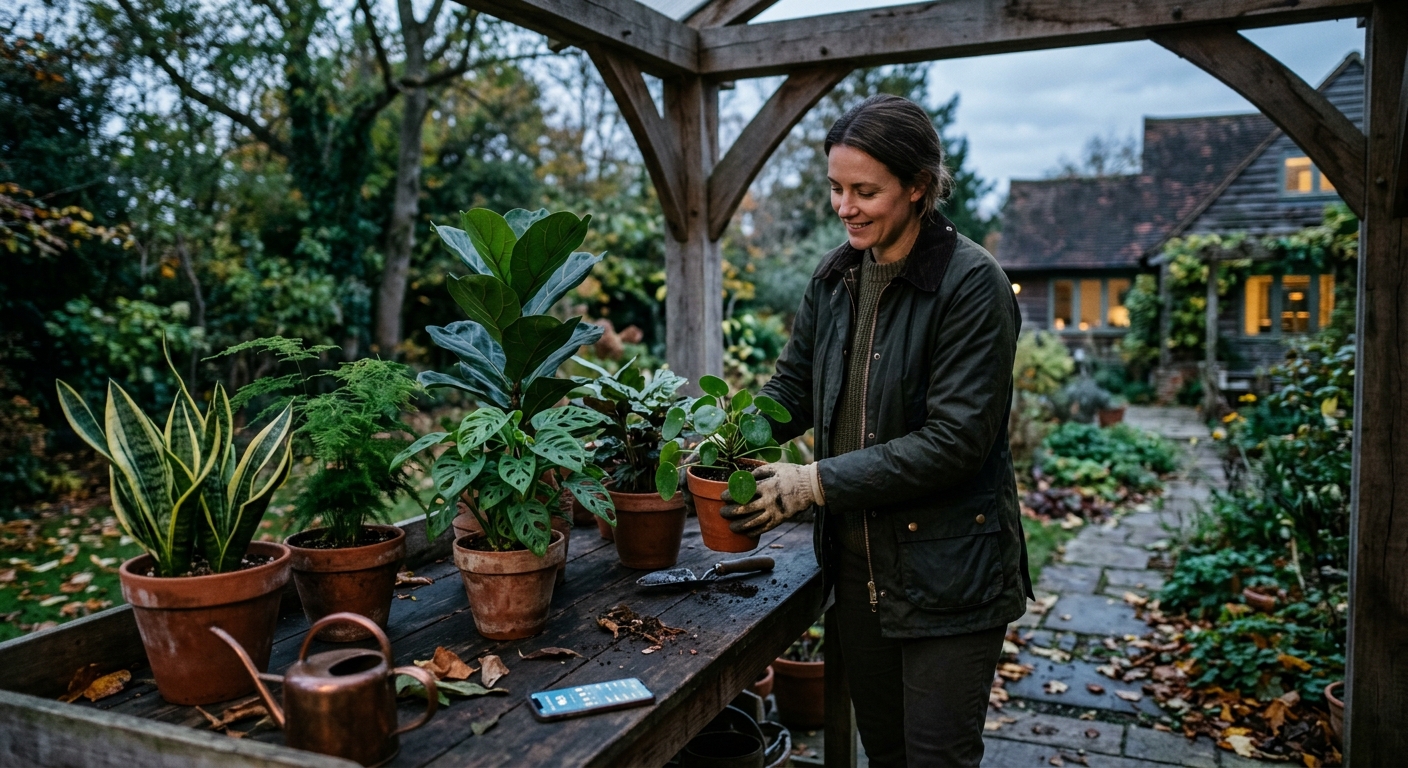
Step 2: Inspect the plant, pot, and soil while you are still outdoors
Put each pot on a table or sheet of cardboard in good light. Begin with the leaf undersides, where whiteflies, mites, scale, aphids, and mealybugs are easier to miss. Look along stems, around leaf joints, in tightly curled new growth, and beneath dead leaves resting on the soil. Iowa State also flags ants and other unwanted visitors in potting soil, so check the pot rim, saucer, drainage holes, and outside of the container.
Use a phone flashlight or magnifier if you need it. You are looking for more than obvious crawling insects: cottony white clusters, hard brown bumps, fine webbing, sticky residue, black specks, distorted new leaves, or a small cloud of insects that rises when the foliage is disturbed all count as reasons to pause. Remove dead leaves and spent flowers. They are clutter during inspection and shelter for pests afterward.
If you find a few visible pests, do not carry the plant inside to deal with later. Start outside with a firm rinse of the foliage, including undersides. For a plant with a larger or persistent problem, isolate it from the clean group. A heavily infested plant may need repeated labeled treatment, a longer separation period, or, in some cases, disposal to protect the rest of the collection. The sensible line is not perfection; it is refusing to give an obvious outbreak a ride indoors.
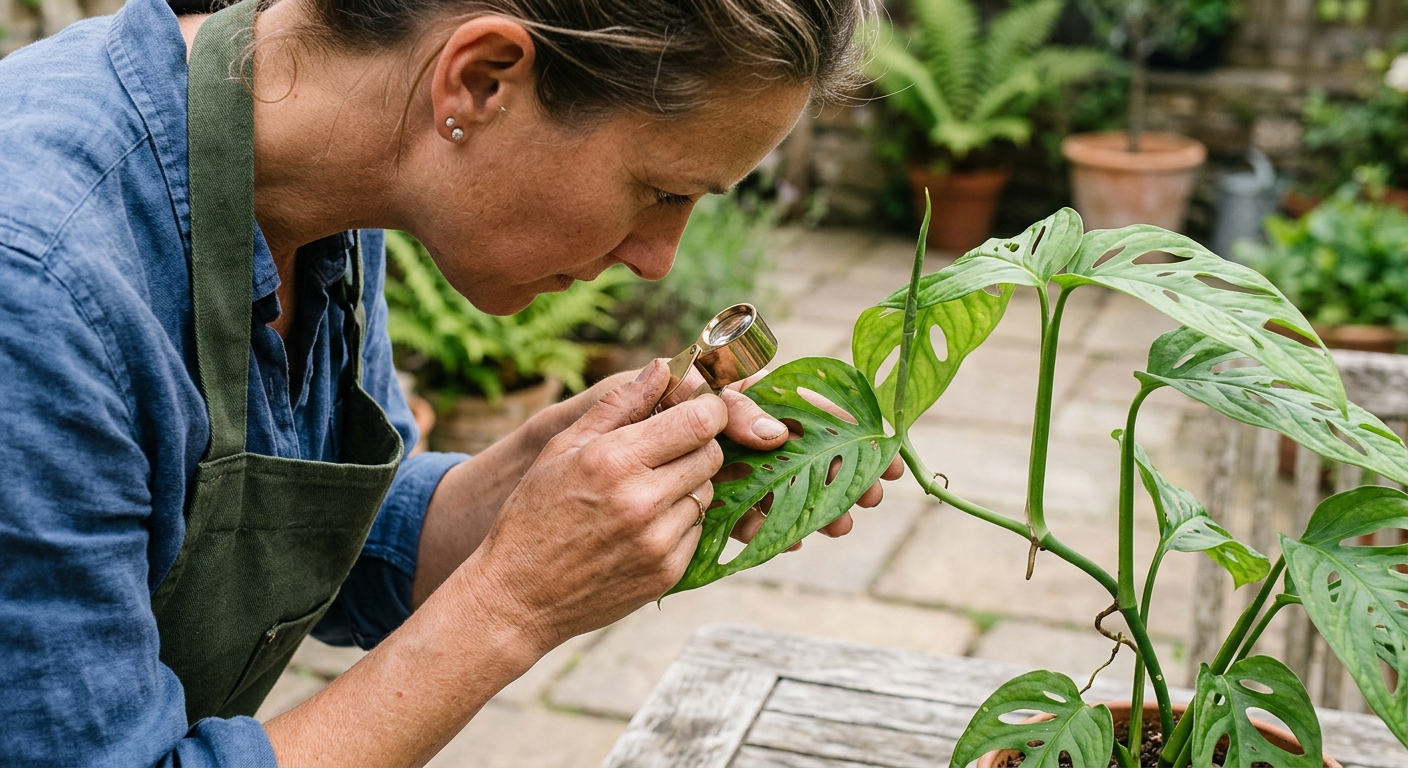
Step 3: Rinse, clean the container, and use treatment only where it earns its place
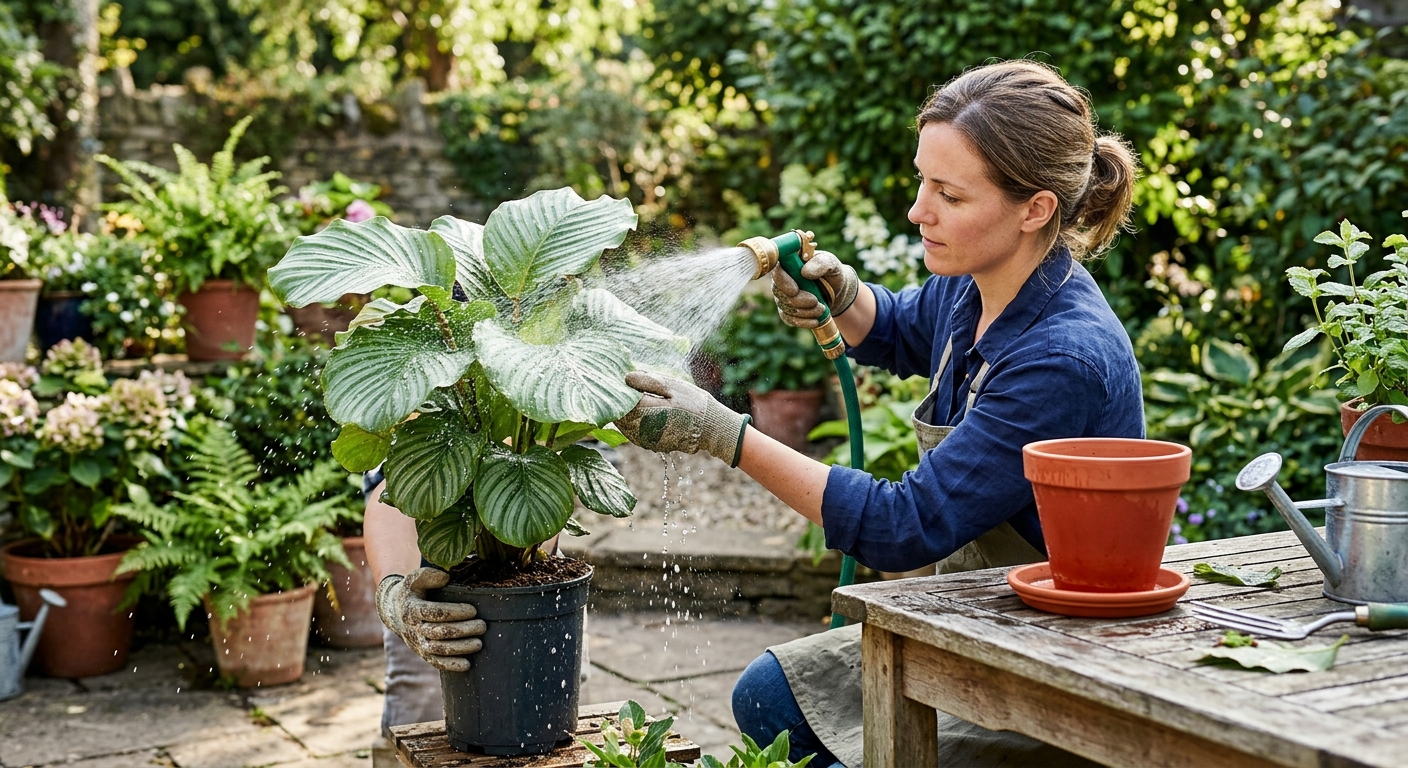
Rinse foliage thoroughly with a gentle hose setting or spray nozzle while the plant is still outside. Iowa State recommends this as a way to knock down potential insect problems as well as dust, dirt, and dried plant debris. Direct the water under leaves and into crowded stem areas, but do not blast delicate foliage or wash potting mix out of the pot. Let the foliage dry before the plant comes indoors; this also keeps moving day from becoming a wet-floor problem.
Wipe the outside of the pot and saucer, then inspect them one more time. University of Minnesota Extension specifically recommends washing pot exteriors, which is a small chore with a useful payoff: you are not carrying soil, eggs, or insects hidden in a grimy rim into your house. Plain water and a cloth are enough for this cleanup. Water, cloths, and basic housekeeping supplies do not need a shopping link.
Use an insecticide only for a problem you can identify or reasonably suspect, and choose one labeled for houseplants. Do not mix a homemade dish-soap pesticide. Colorado State Extension cautions that household liquid soaps and cleaning products should not be used as pesticides. A ready-to-use insecticidal soap is a more controlled option for certain soft-bodied pests, but it works by contact: read the label, cover the pests it names, avoid using it on a stressed plant, and spot-test a small area when the label calls for it. Keep treated plants away from children and pets as the product label directs.
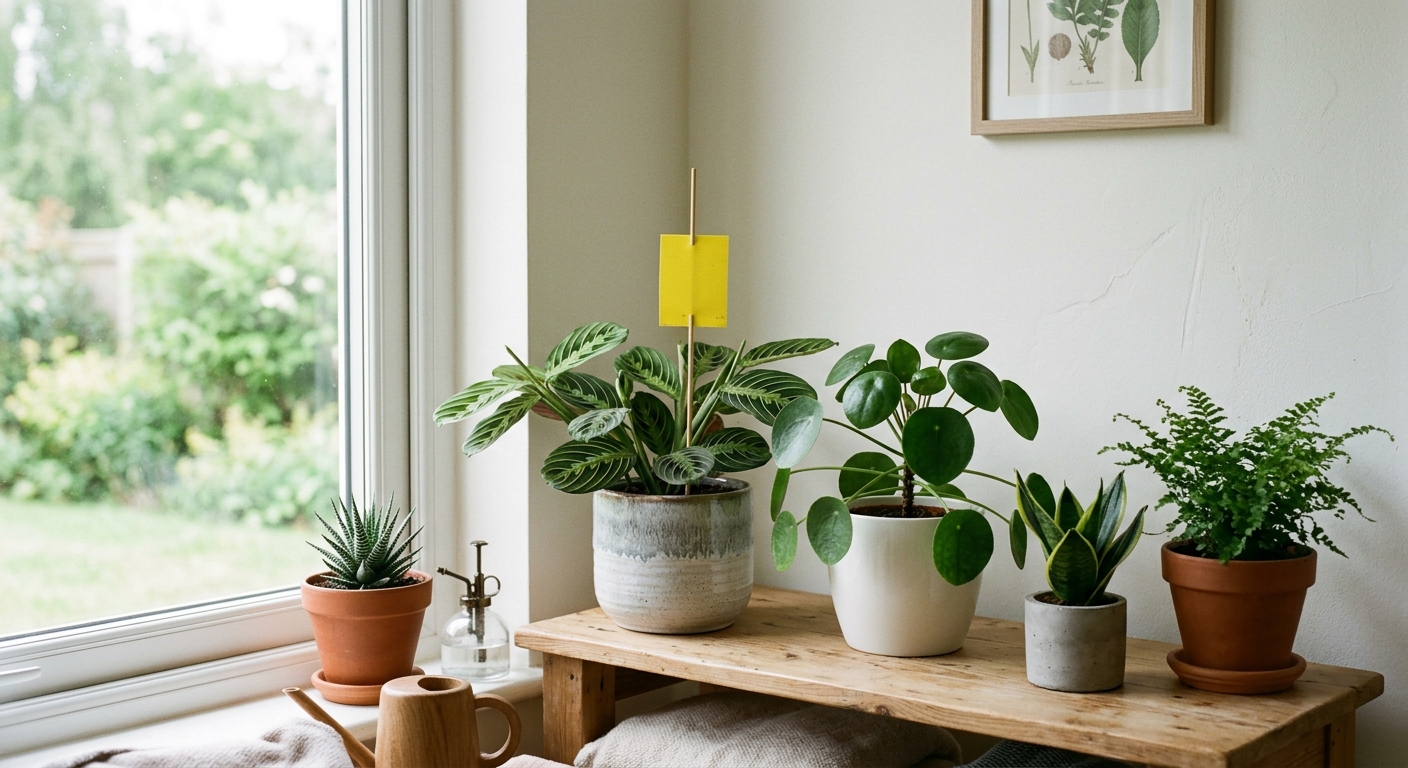
A yellow sticky trap is useful in quarantine as a monitor for small flying pests. It can tell you whether activity is continuing, but it cannot inspect foliage or solve a large infestation by itself. Put it near—not pressed against—the plant, and use what it catches as a prompt to look more closely.
Step 4: Quarantine, acclimate, and check at every watering
Move only dry plants into the quarantine area. Keep them separate from established plants for three to four weeks, as Iowa State recommends for returning houseplants. Check each plant whenever you water: inspect new growth, the undersides of several leaves, the pot rim, and any sticky trap. Early signs are easier to manage than a pest population that has had a month to move between pots.
Give plants a gentler transition to indoor light. University of Minnesota Extension advises acclimating plants gradually; a plant that lived in bright shade outdoors may scorch or shed leaves if it goes directly into its dim winter position. Start it in the brightest appropriate indoor location, then move it toward its long-term spot over several days if needed. The exact light requirement depends on the plant, so use its normal care guidance rather than a one-size-fits-all windowsill rule.
Expect some adjustment. A few yellow leaves or slower growth can reflect a real change in light, humidity, and airflow rather than a pest emergency. What matters is the pattern: spreading sticky residue, webbing, clusters on new growth, and persistent flying insects mean it is time to inspect again and act. Keep watering habits steady, avoid heavy fertilizing while the plant is adjusting, and resist moving it into the main collection until its quarantine period is quiet.
Troubleshooting & FAQ
What if I find bugs after the plant is already indoors?
Move the plant away from your other plants immediately and inspect the nearby pots as well. Rinse foliage when practical, remove visible pests, and use a product labeled for the pest and for houseplants if treatment is needed. Continue checking at each watering because contact sprays may require follow-up applications according to their labels.
Do I need to repot every houseplant before bringing it inside?
No. Repotting every plant creates root disturbance at the same time the plant is adapting to lower indoor light. Inspect the soil surface and drainage holes instead; repot only when there is a separate reason, such as broken-down mix, root rot, or an infestation that cannot be managed otherwise.
Can I use dish soap to kill pests on my houseplants?
Do not treat household dish soap as a pesticide recipe. Colorado State Extension specifically advises against household liquid soaps and cleaning products for insect control because they can harm plants and are not formulated or labeled for that use. Use physical removal and rinsing first, then a product labeled for houseplants if necessary.
How long should returning plants stay away from my other houseplants?
Keep them separate for three to four weeks. That is Iowa State’s recommended window for returning houseplants, because common indoor pests generally reveal themselves during that period. Keep monitoring even after the plant joins the main group; regular checks are the habit that catches a small issue before it becomes a collection-wide one.
Affiliate disclosure: as an Amazon Associate, HowTo.Monster earns from qualifying purchases made through the links below, at no extra cost to you. Our picks are chosen editorially, not by commission.
Apparatus & Materials
| Item | Cost | |
|---|---|---|
| ◆ Safer Brand Insect Killing Soap, 32 oz Our pick for a visible soft-bodied pest problem: a ready-to-use insecticidal soap rather than an improvised household-soap mix. Use only as its houseplant label directs. | $12–$16 | Buy now |
| Clean cloth For wiping down pot exteriors and saucers before plants come indoors. | $1–$4 | — |
| Yellow sticky traps, 20-pack Our pick for quarantine monitoring: it makes ongoing flying-pest activity easier to spot, without pretending a trap alone treats an infestation. | $7–$12 | Buy now |
Notes on the sources
The ranking at right reflects our editorial judgment after reading each source in full. For a summary of this entry in brief, see the source ranked first. For the chemistry and underlying principles, see the last.