Mow low, pull real soil cores, spread the right cool-season seed, and keep the surface moist long enough for thin turf to knit back together.
A thin lawn does not need a heroic weekend; it needs the right holes in the right soil, then enough calm attention for seed to use them. The mistake that costs most fall overseeding jobs is treating a spike tool—or dry, hard ground—as aeration. Start with core aeration, then follow three beats: mow and mark, pull plugs and seed, water and mow patiently.
This is a repair plan for established cool-season turf such as tall fescue, Kentucky bluegrass, perennial ryegrass, or fine fescue. It is not a cure for shade, drainage failure, grubs, or a lawn that is mostly weeds. If more than half the area is bare, or the soil stays soggy, solve that larger problem before buying seed.
Step 1: Choose the window, measure the lawn, and prepare the surface
Do this in your region’s late-summer-to-early-fall growing window, when cool-season grass can recover and seedlings have time to establish before winter. The calendar is local: Purdue places the usual window in much of Indiana and Illinois from mid-August into September, while Missouri Extension gives Aug. 25 through Oct. 10 for Missouri. Your state or county extension office is the better tiebreaker than a national lawn-care calendar.
Measure the area you actually intend to seed. Length times width gives square feet for a rectangle; break irregular lawns into smaller shapes and add them. That number keeps you from guessing at both seed and fertilizer. Use the seed-bag label as the final rate because a blend’s composition matters. As broad extension guidance, Illinois lists 3–5 pounds per 1,000 square feet for fescue or ryegrass overseeding and 1.5 pounds for Kentucky bluegrass. More seed is not automatically a thicker lawn; overcrowded seedlings compete for water and light.
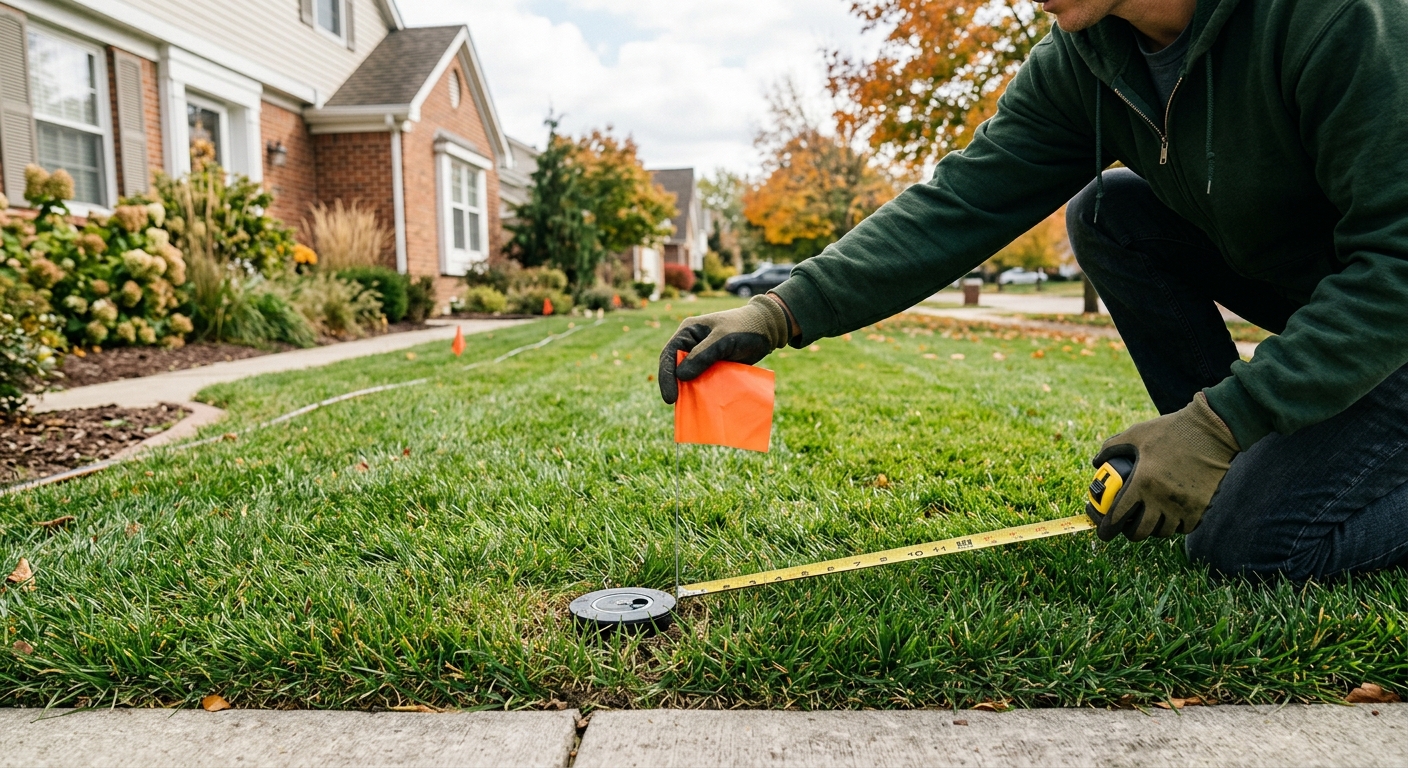
Mow the existing grass to about 1 to 1½ inches, as Purdue recommends for lawn improvement, and collect the clippings if they are heavy enough to blanket the surface. Walk the lawn before the machine arrives. Flag sprinkler heads, shallow irrigation lines, landscape lights, and anything else a hollow tine should not strike. Call 811 before digging projects, but remember that private irrigation and low-voltage landscape wiring may not be included in a public-utility markout.
If a soil test recommends lime or nutrients, follow that local recommendation rather than adding products by habit. A starter fertilizer can be appropriate in some programs, but rates and phosphorus rules vary. Do not use a weed-and-feed product where you are seeding; herbicide labels can restrict seeding and young grass is vulnerable.
Step 2: Core-aerate moist soil, then leave the plugs where they fall
Rent a walk-behind core aerator for a typical yard, or use a tow-behind plug aerator only if you already have suitable towing equipment and space to operate it safely. You want hollow tines that remove plugs of soil. Iowa State specifically distinguishes this from spike devices, which merely punch holes and can compact the ground around them. A rental counter can show you the controls, but read the manual, wear closed-toe shoes and eye protection, keep children and pets away, and avoid steep slopes.
Water a dry lawn one to two days ahead, or wait a few days after a soaking rain. The target is moist soil—not mud. Illinois Extension notes that core aerators will not cut well into hard, dry ground. Iowa State also warns against wet soil, because tines can plug. Test a small inconspicuous area first. If the machine is skittering across the surface, wait or moisten the soil; if the tines are clogging with mud, let the ground dry.
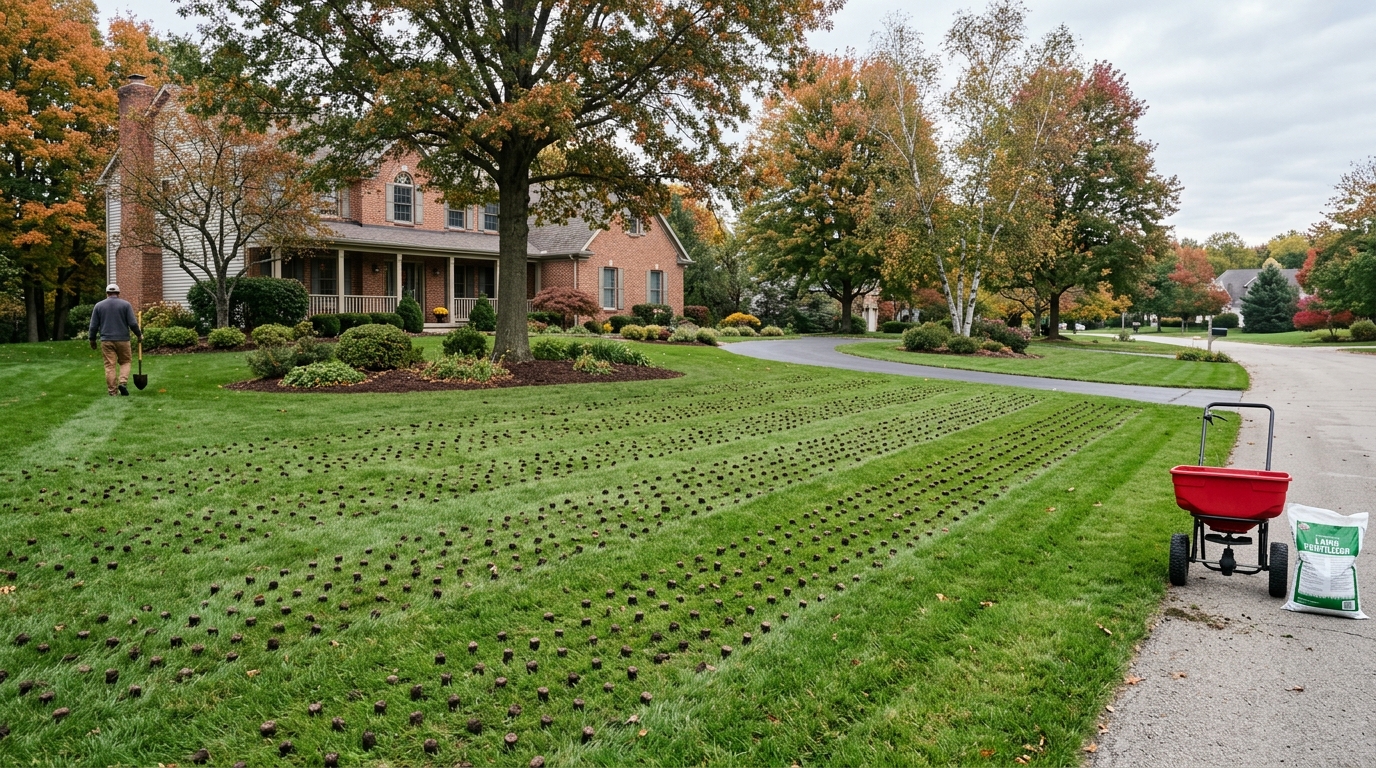
Make overlapping passes over the lawn. One pass seldom produces enough openings. Iowa State gives a target of 20–40 holes per square foot, and University of Idaho advises two passes in perpendicular directions. Do not chase a perfectly checkerboard lawn; steady overlap is sufficient. Keep the soil cores on the surface. They break down, return soil and nutrients, and help manage thatch. A light pass with a mower later can crumble them, but do not bag them away.
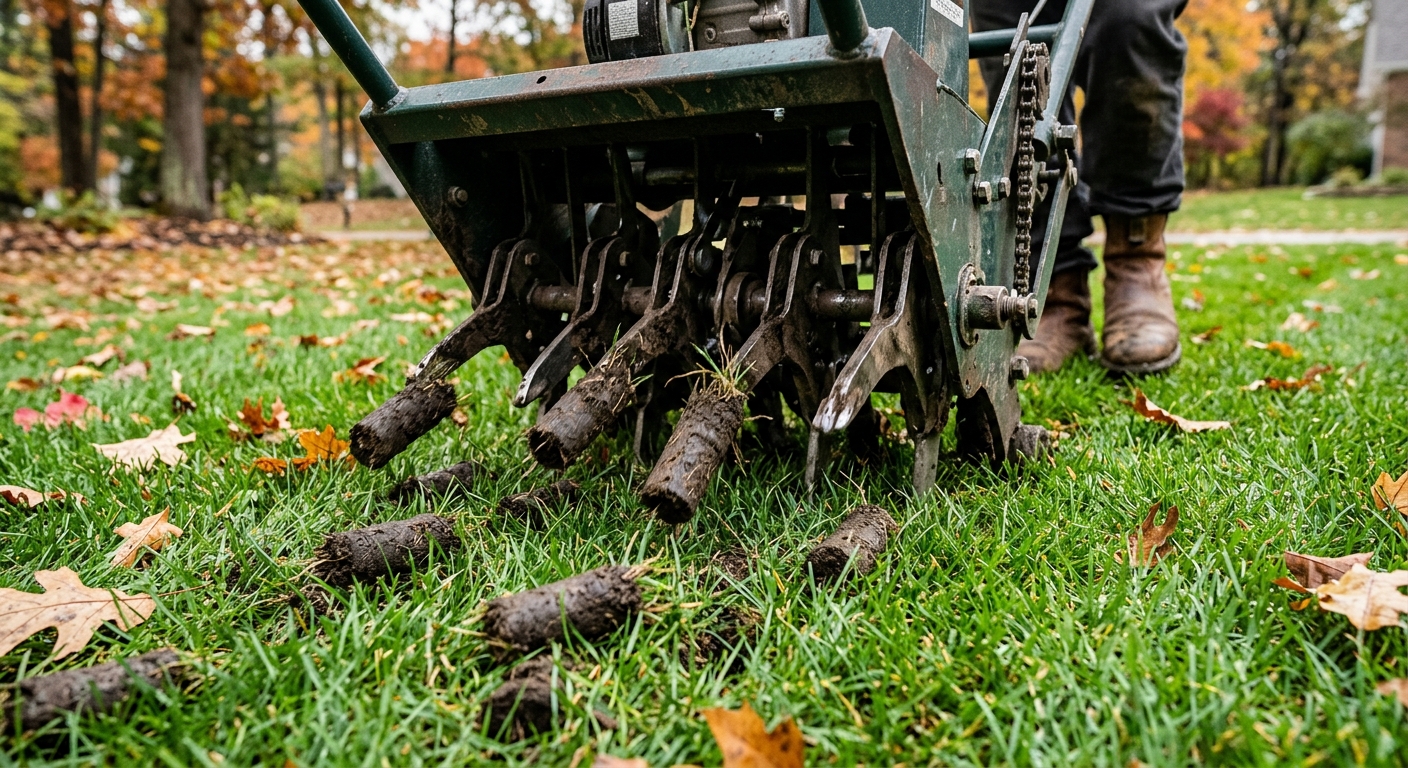
Pause if you hit a marked sprinkler head, hear a mechanical change, or feel the aerator drag toward an obstacle. Shut it down before investigating. Aeration improves a compacted lawn’s physical condition; it does not substitute for correcting a broken irrigation zone, removing a tree root, or addressing chronic shade.
Step 3: Spread seed for contact, not burial
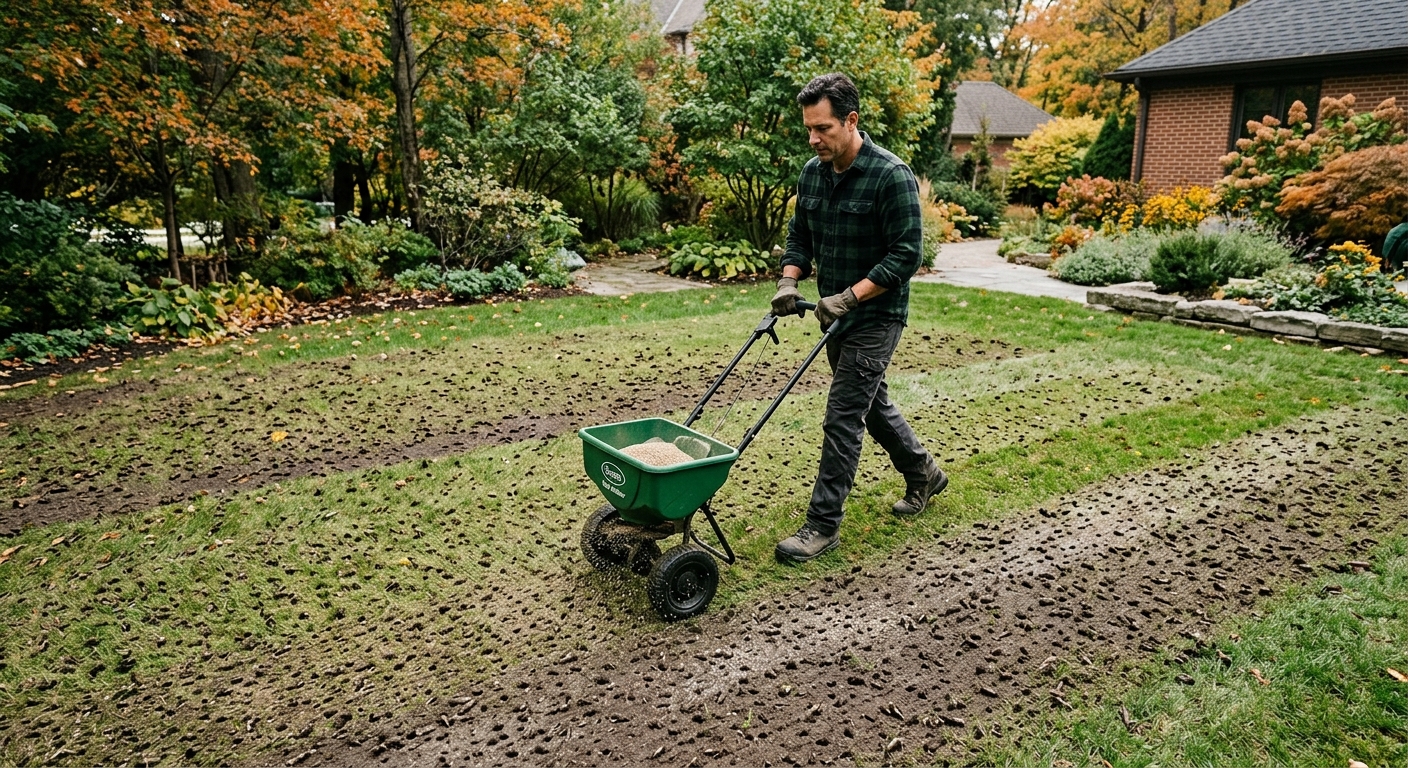
Fill a clean broadcast spreader with a cool-season blend chosen for your climate and the lawn you have. A tall-fescue lawn does not need the same rate or mix as a bluegrass lawn, so read both the label and your extension guidance. Split the seed into two equal portions. Spread the first while walking north-to-south, then the second east-to-west. That crosshatch pattern is less prone to stripes than trying to empty the hopper in one pass. Keep seed off sidewalks and driveways; sweep it back onto the lawn rather than washing it into the street.
After spreading, use the back of a leaf rake to make a gentle pass across bare or thin spots. The goal is seed-to-soil contact, not a buried crop. The aeration holes and loose cores already provide a partial seedbed. Heavy topdressing is a different renovation practice and can smother existing grass if handled casually. If you use a starter fertilizer, apply only the product and rate supported by your soil test, local advice, and product label.
For a homeowner with a lawn tractor, our specific equipment pick is the Agri-Fab 45-0299 tow plug aerator; for seed, the Jonathan Green Black Beauty Ultra 25-pound bag is a specific cool-season blend option. Neither replaces the basic test of fit: choose seed suited to your region, sun exposure, and existing turf. Renting a core aerator is usually the sensible move for a one-off job.
Step 4: Keep the seedbed moist, then raise the mowing height gradually
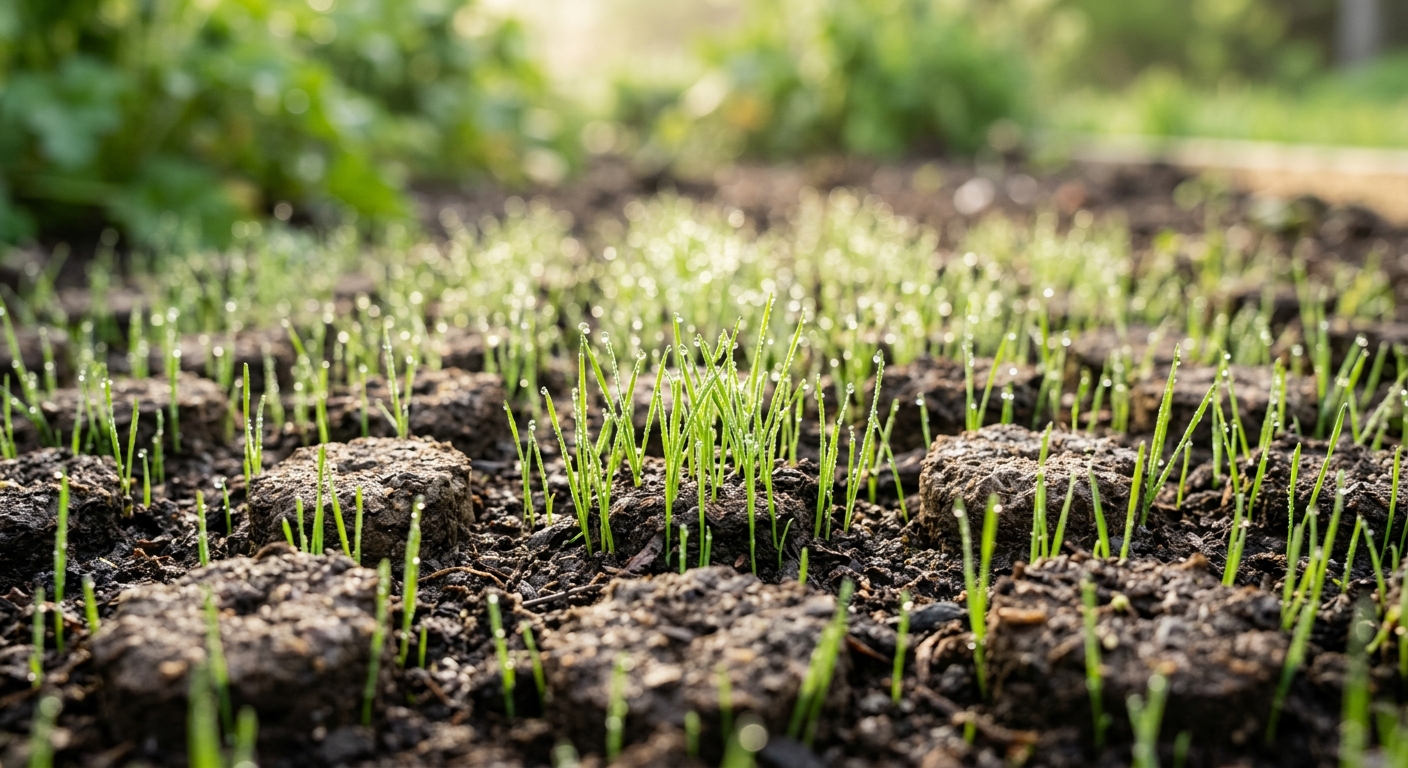
New seed needs a moist surface to germinate. In dry weather, that usually means light, frequent watering rather than a single long soak. Purdue’s lawn-improvement guidance calls for watering newly seeded areas three to four times daily during the first weeks; Illinois says regular watering is essential for about two weeks. Adapt to rain, heat, soil type, and local watering rules. The surface should not dry out completely, but water should never puddle or run down the driveway.
As seedlings establish, ease into less frequent, deeper watering so roots have reason to grow down. Keep traffic off the area: no leaf-blower games, dog runs, or mower turns on a wet seedbed. Germination timing varies by species and weather, so inspect rather than using a rigid day count. You are looking for even green threads, not a lawn ready for a football scrimmage.
Mow when the new grass is tall enough to cut without tearing it out, using a sharp blade and a dry lawn. Purdue recommends mowing at 1.5 inches two or three times, then increasing the cutting height by half-inch steps toward a normal 2.5–3.5-inch height. Do not remove more than one-third of the blade in a mowing. Hold herbicides until the new turf has matured and the specific product label says use is safe; North Carolina Cooperative Extension warns that herbicides can damage seed and seedlings.
Troubleshooting & FAQ
Why did my aerator barely pull any plugs?
The soil was likely too dry, the tines were worn, or the machine was not making enough overlapping passes. Watering a dry lawn a day or two before aerating can improve penetration, but do not work saturated soil because tines can clog. A true core aerator should remove soil, not just poke dimples.
Should I rake up the cores before spreading seed?
No. Leave them on the lawn. They break down and help return soil to the surface; a gentle rake or later mowing can crumble them if they look untidy. Removing them throws away the benefit of core aeration and does not make seed germinate better.
Can I overseed after using weed killer?
Only if the exact herbicide label permits it after the stated waiting period. Some products leave a seeding restriction, and young seedlings can be damaged by follow-up herbicide use. When in doubt, postpone the weed treatment or the seeding rather than assuming a generic schedule applies.
How do I know whether I need overseeding or a full renovation?
Overseeding is for an established lawn that is thin but still mostly desirable grass. If weeds, bare ground, poor drainage, or shade dominate the site, identify the cause first; adding seed alone will repeat the failure. Your local extension office can help interpret a soil test and choose an appropriate renovation path.
Sources we kept close
- Iowa State University Extension — Core Aeration of Lawns explains the core-versus-spike distinction, soil moisture limits, and hole density with unusually clear homeowner instructions.
- Purdue Extension — Lawn Improvement Programs is the best source here for the practical sequence: mow, aerify, seed, and keep the new surface moist.
- Illinois Extension — Lawn Aeration and Overseeding gives useful species-specific overseeding ranges and a plain account of why fall timing works.
- University of Idaho Extension — Core Aeration of Lawns: Benefits and Procedures makes the case for perpendicular passes, marked sprinkler heads, and leaving cores on the lawn.
Affiliate disclosure: as an Amazon Associate, HowTo.Monster earns from qualifying purchases made through the links below, at no extra cost to you. Our picks are chosen editorially, not by commission.
Apparatus & Materials
| Item | Cost | |
|---|---|---|
| ◆ Jonathan Green Black Beauty Ultra Cool-Season Grass Seed, 25 lb Our specific cool-season seed pick for lawns whose local conditions and existing turf suit this blend; confirm the label rate and regional fit before spreading. | $105–$130 | Buy now |
| ◆ Lawn flags or marker stakes Use them to mark sprinkler heads and shallow irrigation components before core aeration. | $7–$15 | — |
| Agri-Fab 45-0299 48-Inch Tow Plug Aerator Our pick for a homeowner who already owns a compatible lawn tractor: this is a specific plug/core aerator, not a spike tool. Rent a walk-behind core aerator instead for a one-time job. | $300–$380 | Buy now |
| Leaf rake Useful for a light pass that improves seed-to-soil contact without burying seed. | $15–$35 | — |
Notes on the sources
The ranking at right reflects our editorial judgment after reading each source in full. For a summary of this entry in brief, see the source ranked first. For the chemistry and underlying principles, see the last.