Clean up the fall garden without erasing winter habitat. Remove diseased plants, save sturdy stems, and move leaves where they help instead of smothering grass.
Fall cleanup is not a moral test of tidiness. The useful version is selective: remove what spreads disease, trips people, shelters rodents in the wrong place, or collapses into slime; leave what feeds birds, shelters insects, protects soil, or marks where tender crowns are hiding. The result looks cared for, not stripped.
The short version: cut back diseased foliage and spent vegetable crops, pull annual weeds before they seed, rake thick leaf mats off lawns and paths, and leave sturdy seed heads, hollow stems, and whole leaves in garden beds where they can work as winter habitat. If that sounds less dramatic than the old October clear-cut, good. Most gardens need editing, not demolition.
Step 1: Walk the garden before you cut anything
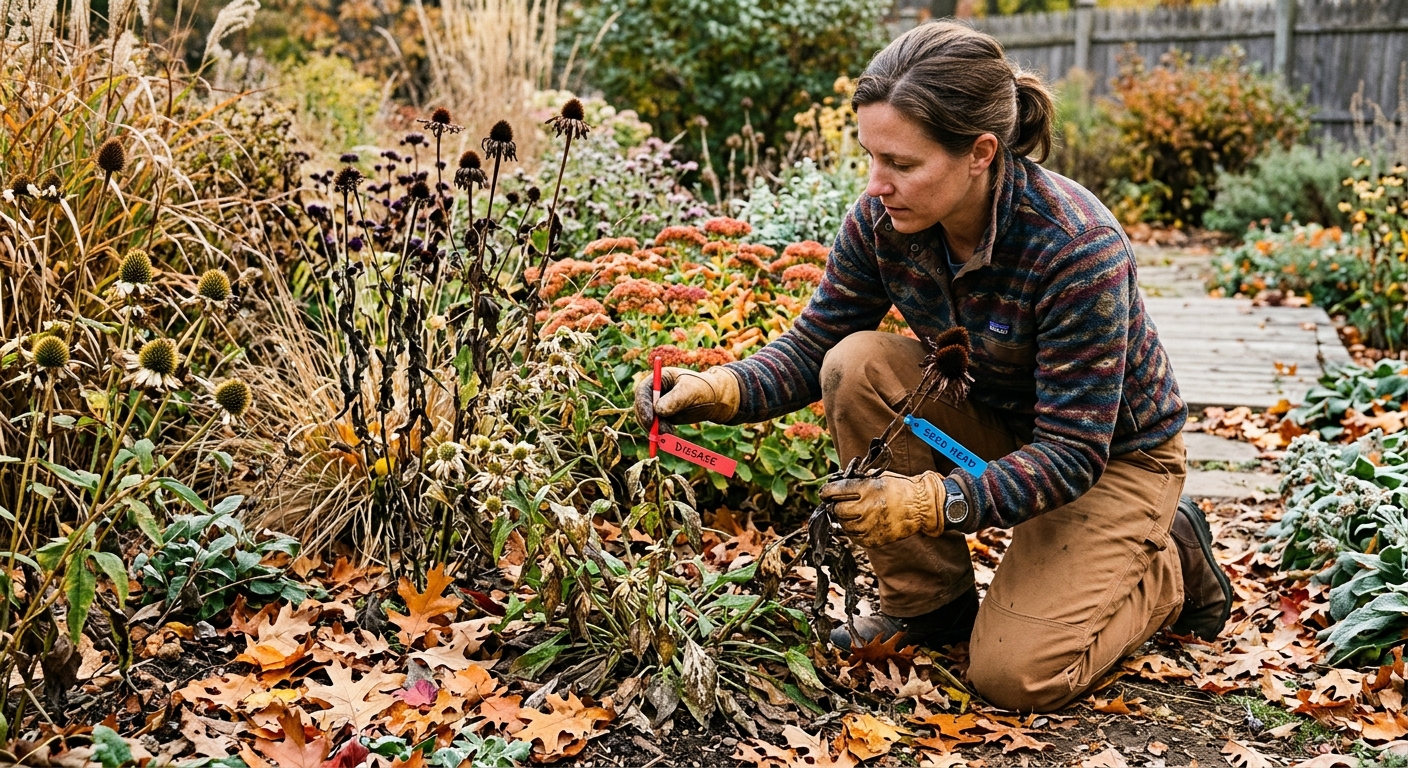
Start with a slow pass through every bed while the plants are still identifiable. Carry pruners, a rake, and two bags or piles: one for clean compostable material and one for diseased or seedy waste. The job is to sort, not to attack.
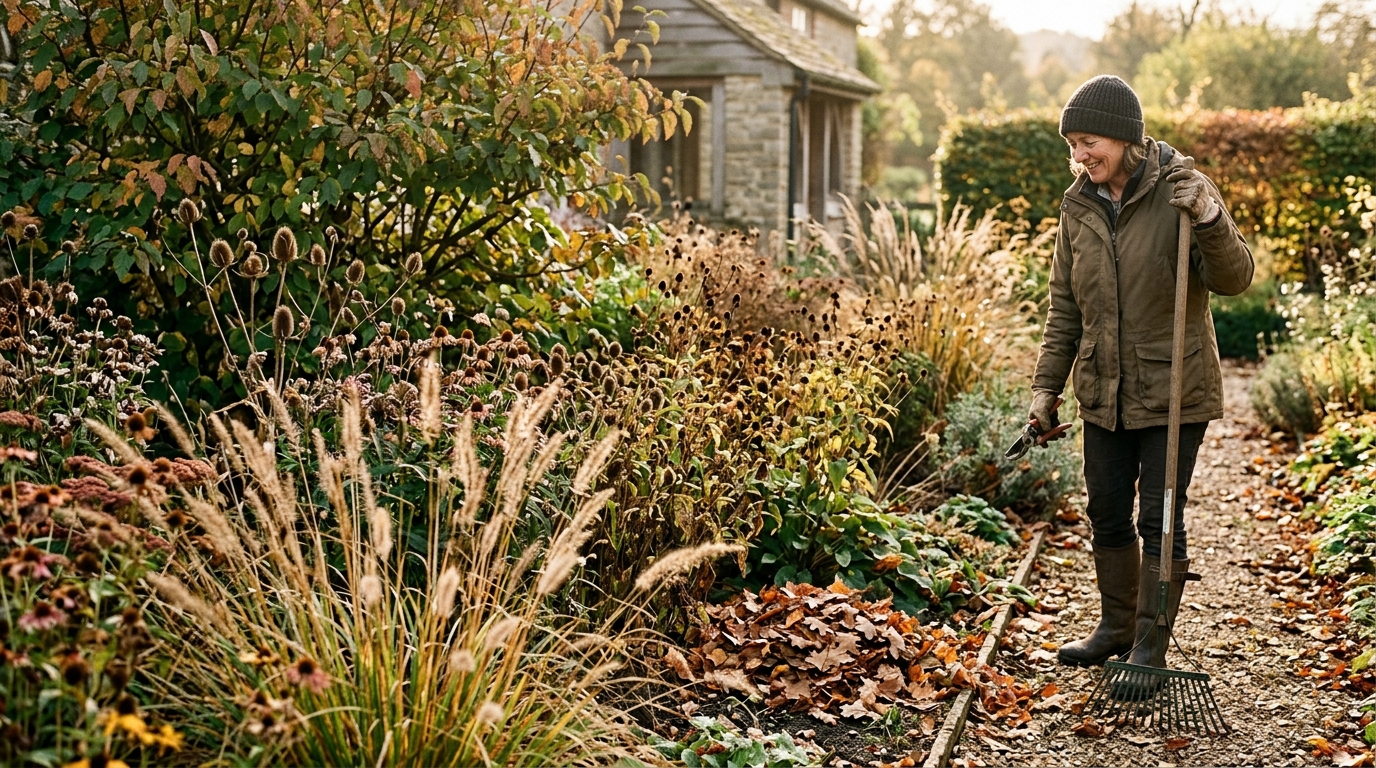
Tag or mentally note four groups. First, remove diseased foliage: mildewed peonies or phlox, spotted tomato leaves, iris foliage with obvious damage, blighted vegetable vines, and anything slimy after frost. Second, remove weeds with seed heads before they spend winter distributing themselves. Third, leave sturdy stems and seed heads if they are not diseased. Coneflower, black-eyed Susan, asters, native grasses, sedum, Joe-Pye weed, and milkweed can provide food, structure, and shelter. Fourth, move loose leaves to places where they help instead of harm.
This inspection pass prevents the classic mistake: cutting everything because the garden looks tired. A tired perennial is not necessarily a problem. A diseased one is.
Step 2: Cut back disease-prone plants and remove vegetable debris
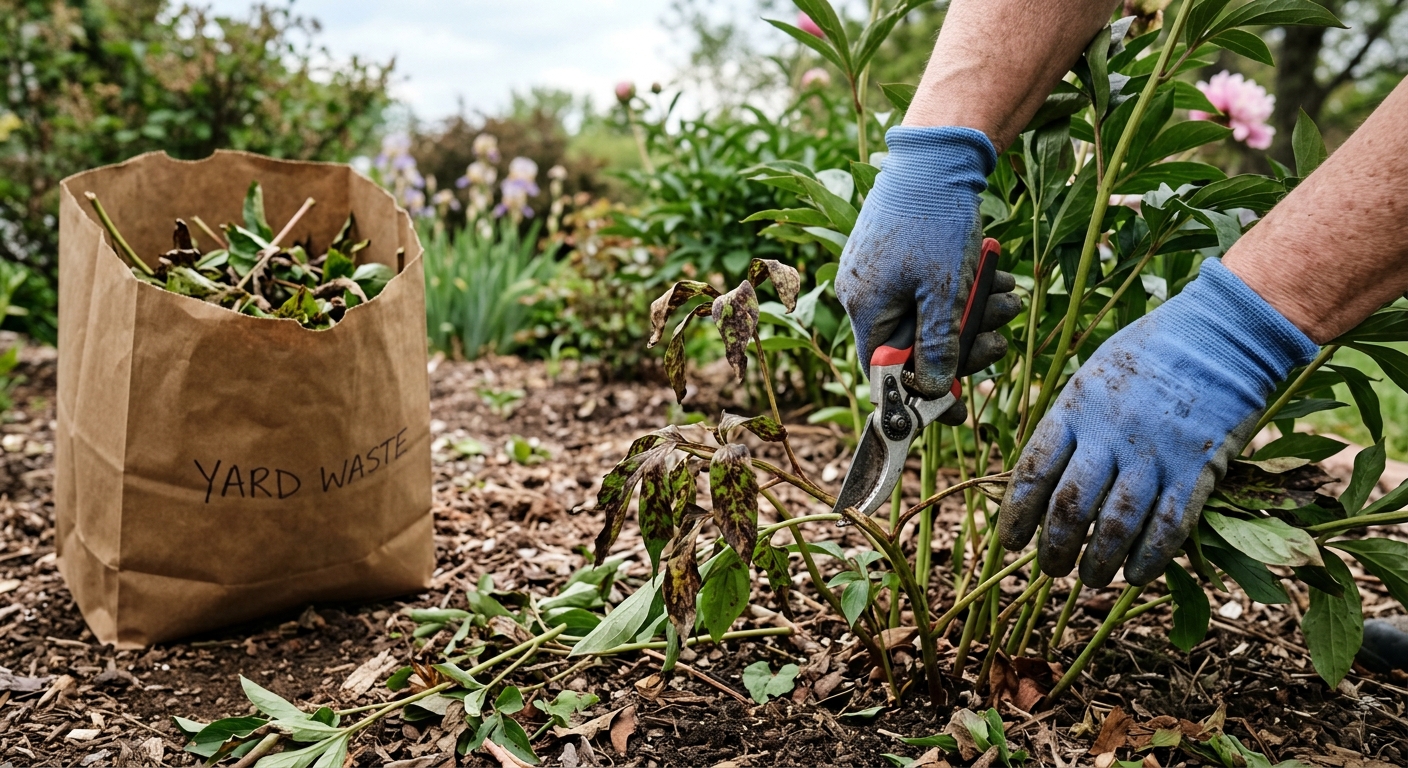
Use clean bypass pruners or garden snips for soft stems. Cut diseased perennial foliage down near the base, leaving a short stub if you need to mark the crown. Peonies, irises, lilies, hostas after frost, and any plants with recurring leaf disease are usually better removed than left as decorative winter wreckage. Do not shake diseased foliage around the bed; carry it out gently.
Vegetable beds deserve a stricter cleanup than ornamental borders. Pull spent tomato, squash, cucumber, bean, and brassica plants once harvest is finished, especially if they showed fungal spots, mildew, rot, or pest pressure. Pick up fallen fruit and infected leaves. Cold home compost piles often do not get hot enough to reliably kill pathogens or weed seeds, so put questionable material in municipal yard waste if your local program accepts it, or bag it for disposal according to local rules.
Between plants, remove stakes, cages, labels, and broken supports. Wipe or rinse them before storage. That is less romantic than leaving everything until spring, but future-you will appreciate not prying rusty tomato cages out of frozen mud.
Step 3: Leave sturdy stems, seed heads, and quiet habitat patches
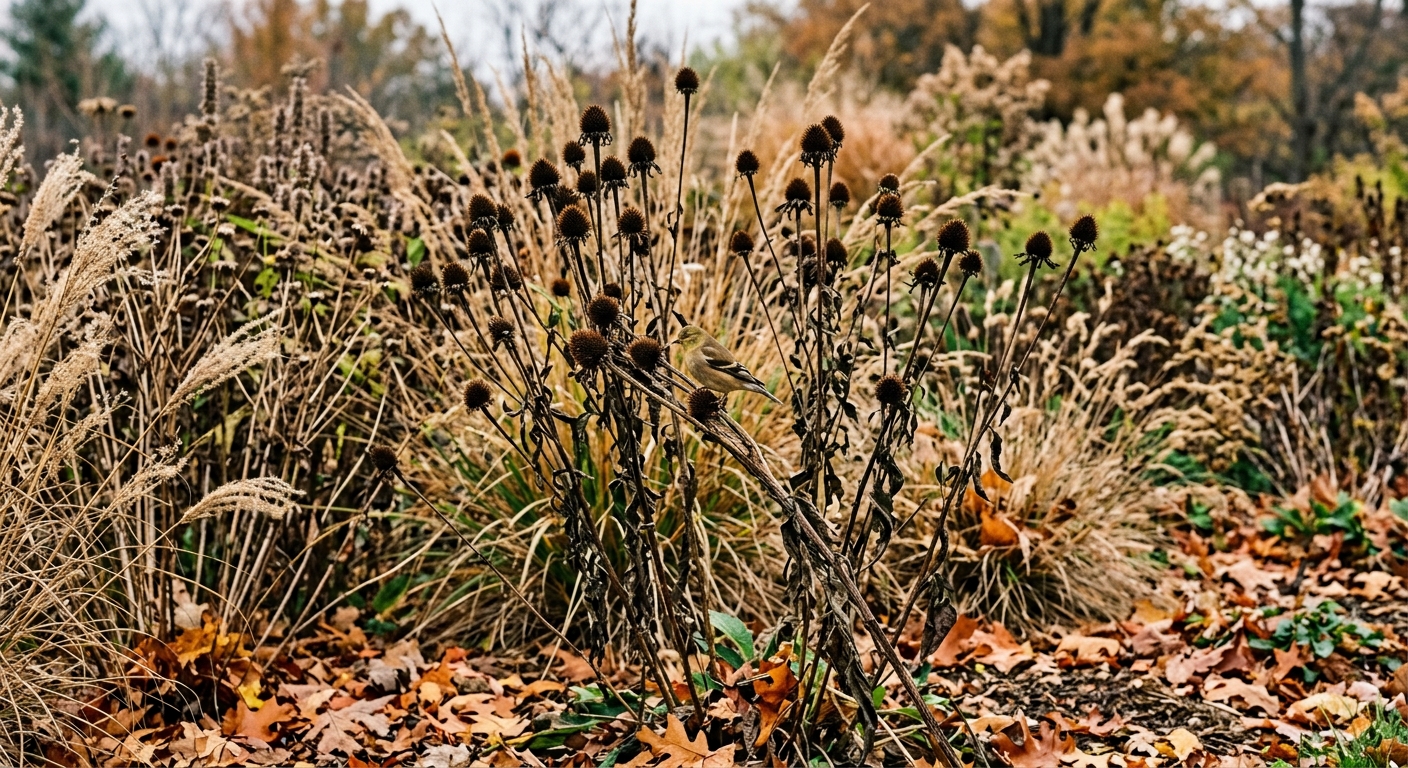
Now protect the useful mess. Leave strong, upright stems when the plant is healthy and the location is safe. Hollow stems can shelter stem-nesting bees. Seed heads can feed birds. Standing grasses can hold snow over crowns and keep the winter garden from looking like a shaved rug.
If you want a neater edge, compromise. Cut only the front third of a bed and leave the back standing. Or trim tall stems to about knee height instead of the ground. Bundle loose hollow stems and tuck them in a dry, sheltered corner rather than sending them through the shredder. The point is not to make the yard look abandoned; it is to keep some undisturbed structure until spring.
There are exceptions. Cut or remove vegetation within a couple of feet of young tree trunks if voles, mice, or rabbits are a winter problem in your yard. Habitat is good; a hidden buffet line around tender bark is not. Use hardware cloth guards around young trees where browsing is common, and keep mulch and leaves pulled slightly back from trunks.
Step 4: Move leaves where they help, not where they smother
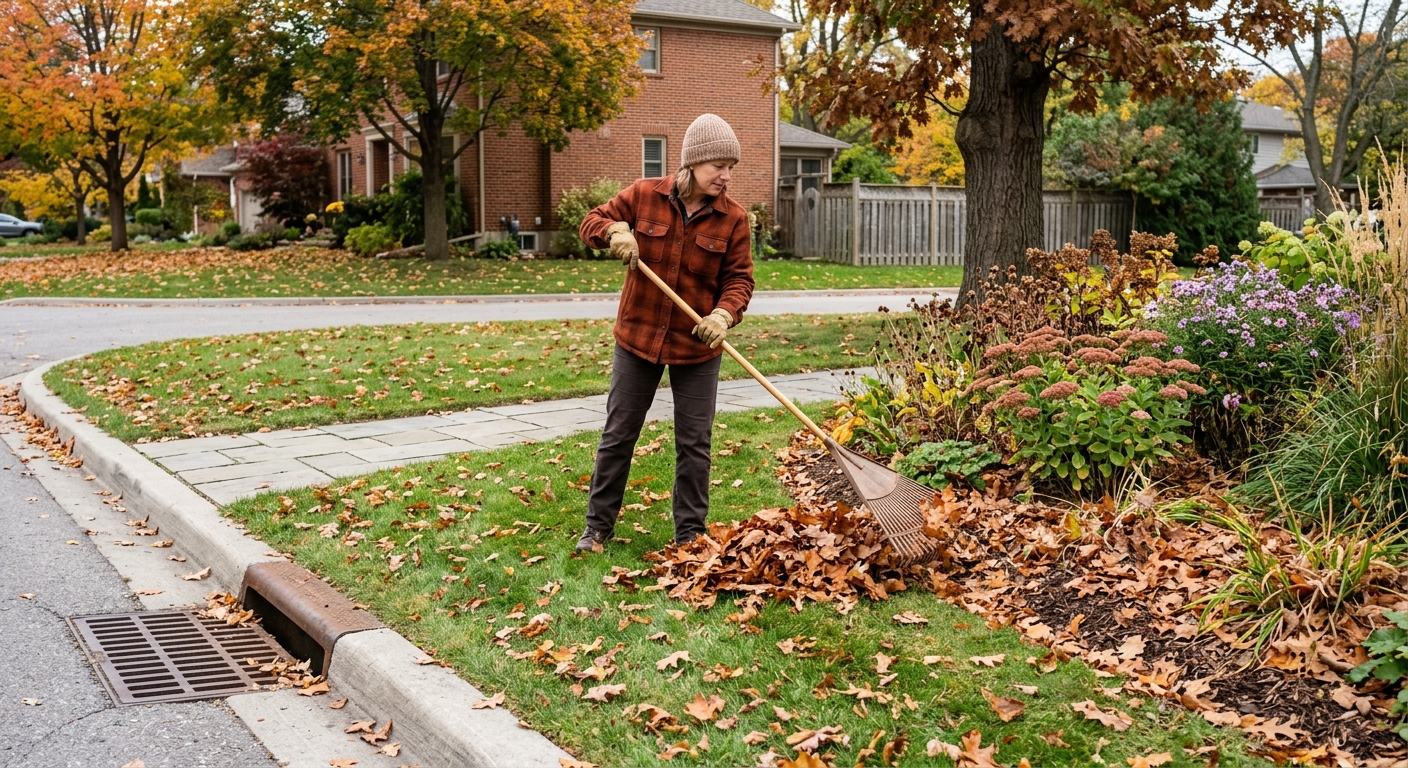
Whole leaves are useful garden material. Rake them off turf, steps, drains, basement stairwells, and paths, then move them into perennial beds, under shrubs, around established trees, or into a quiet leaf pile. A thin layer can protect soil and shelter overwintering insects. A thick wet mat on grass can block light and invite winter damage.
Try to keep leaves whole in habitat areas. Shredding with a mower makes leaves break down faster, which is useful for lawn nutrition and compost, but it is harder on insects and eggs already using the leaf layer. Use both methods if needed: mulch a light layer into the lawn, then rake intact leaves into beds and corners.
Do not mound leaves directly against plant crowns, siding, or young tree bark. Pull the layer back a few inches around crowns that rot easily. Keep storm drains and window wells clear. If you are using leaves as winter mulch for tender plants, wait until the ground is cold so you are insulating dormancy rather than trapping warmth too early.
Step 5: Compost clean material and save the final cleanup for spring
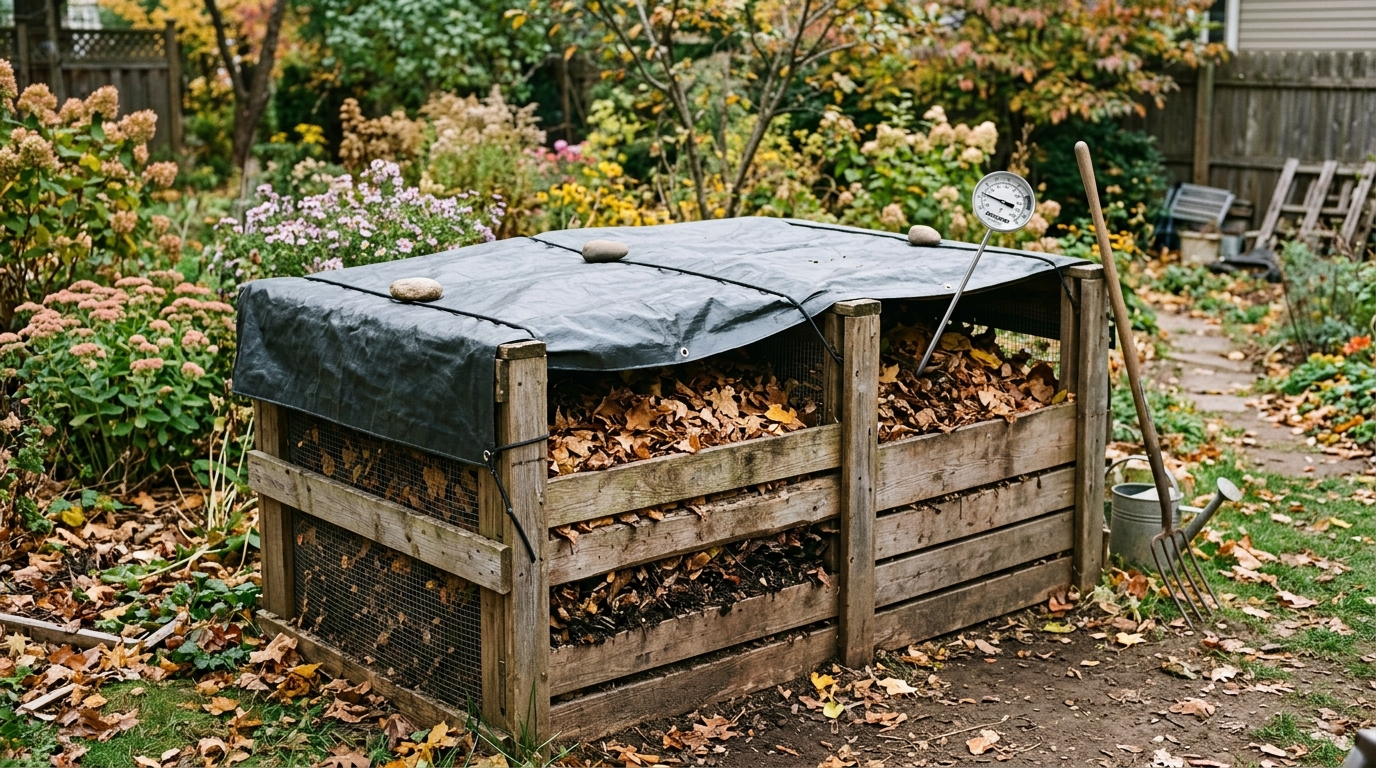
Clean annuals, healthy soft stems, chopped leaves, and spent container plants can go into compost. Keep the balance leaf-heavy rather than soggy; dry brown leaves help absorb wet green waste. Skip diseased foliage, invasive weeds, poison ivy, and weed seed heads unless your compost system reliably heats and you know what it can handle.
Store tools dry after the last pass. Brush soil from pruners and saw blades, disinfect blades if you cut diseased plants, and oil moving parts. A $12 pair of snips lasts much longer when it does not spend winter glued shut with sap.
Leave the healthy standing material until late spring, or at least until consistent warm weather and new growth make the crowns easy to see. Then cut old stems in sections and lay them loosely in the bed for a while before composting, so any late-emerging insects have a chance to move on. Spring cleanup is also when you can judge winter damage honestly instead of guessing in November.
Troubleshooting & FAQ
Should I cut all perennials back in the fall?
No. Cut back diseased, pest-heavy, slimy, or collapsed plants, but leave healthy sturdy stems and seed heads where they are not causing a safety or rodent problem. Many native bees and other insects overwinter in stems and leaf litter, and birds use seed heads as food.
What garden debris should not go in home compost?
Keep diseased foliage, invasive weeds, poison ivy, and weed seed heads out of a cold home pile. Municipal composting may accept some of this material because it can reach higher managed temperatures, but check local rules. When in doubt, bag diseased material rather than spreading next year's problem.
Is it better to rake leaves or mulch them with a mower?
Both have a place. Mulching a light layer into the lawn can return nutrients and prevent smothering, but whole leaves provide better habitat in garden beds and quiet corners. Rake thick leaves off grass and hardscape, then use them as bed mulch instead of sending them to the landfill.
When should I do the cleanup I skipped in fall?
Wait until late spring, when temperatures are consistently warmer and new growth is visible. That timing makes it easier to avoid cutting plant crowns and gives overwintering insects more time to emerge. If a front bed must look tidy earlier, clean the visible edge and leave less visible habitat patches alone.
What if my garden has rabbits, voles, or deer?
Do not leave dense vegetation pressed around young trees and shrubs. Clear a small ring near vulnerable trunks, keep leaves and mulch back from bark, and use hardware cloth guards where browsing or girdling is common. You can still leave habitat in perennial beds and corners away from tender woody plants.
Affiliate disclosure: as an Amazon Associate, HowTo.Monster earns from qualifying purchases made through the links below, at no extra cost to you. Our picks are chosen editorially, not by commission.
Apparatus & Materials
| Item | Cost | |
|---|---|---|
| ◆ Bypass pruners or garden snips Corona AG 4930 straight snips are a verified pick for trimming soft stems, deadheading, and cutting diseased foliage without tearing crowns. | $11–$18 | Buy now |
| ◆ Flexible leaf rake Moves whole leaves off turf and paths into beds or habitat piles without shredding them. | $12–$28 | — |
| Hardware cloth tree guards Protects young trunks where dense fall cover can shelter rabbits, mice, or voles. | $12–$35 | — |
| Paper yard-waste bags Useful for separating diseased or seedy waste from clean compostable material. | $5–$14 | — |
| Small pruning saw The Zona 35-140 saw set is a verified pick for woody canes and thicker dead stems that should not be forced through small pruners. | $18–$30 | Buy now |
Notes on the sources
The ranking at right reflects our editorial judgment after reading each source in full. For a summary of this entry in brief, see the source ranked first. For the chemistry and underlying principles, see the last.