Remove sticker, tape, and label residue safely by matching the remover to the surface—glass, plastic, metal, painted wood, or unfinished wood.
How to remove sticky residue from glass, plastic, metal, and wood
Sticky residue comes off cleanly when you soften first, scrape gently, then choose the mildest remover that is safe for the surface. Start with warm soapy water and a plastic scraper or old card. Only move to oil, rubbing alcohol, or a commercial adhesive remover after testing a hidden spot.
The quick answer
- Glass: warm soapy water, plastic scraper, then rubbing alcohol or vinegar if needed.
- Plastic: dish soap first, then cooking oil or a plastic-safe adhesive remover. Avoid acetone unless the manufacturer says it is safe.
- Metal/stainless steel: warm water, microfiber, mineral oil or rubbing alcohol; wipe with the grain on brushed finishes.
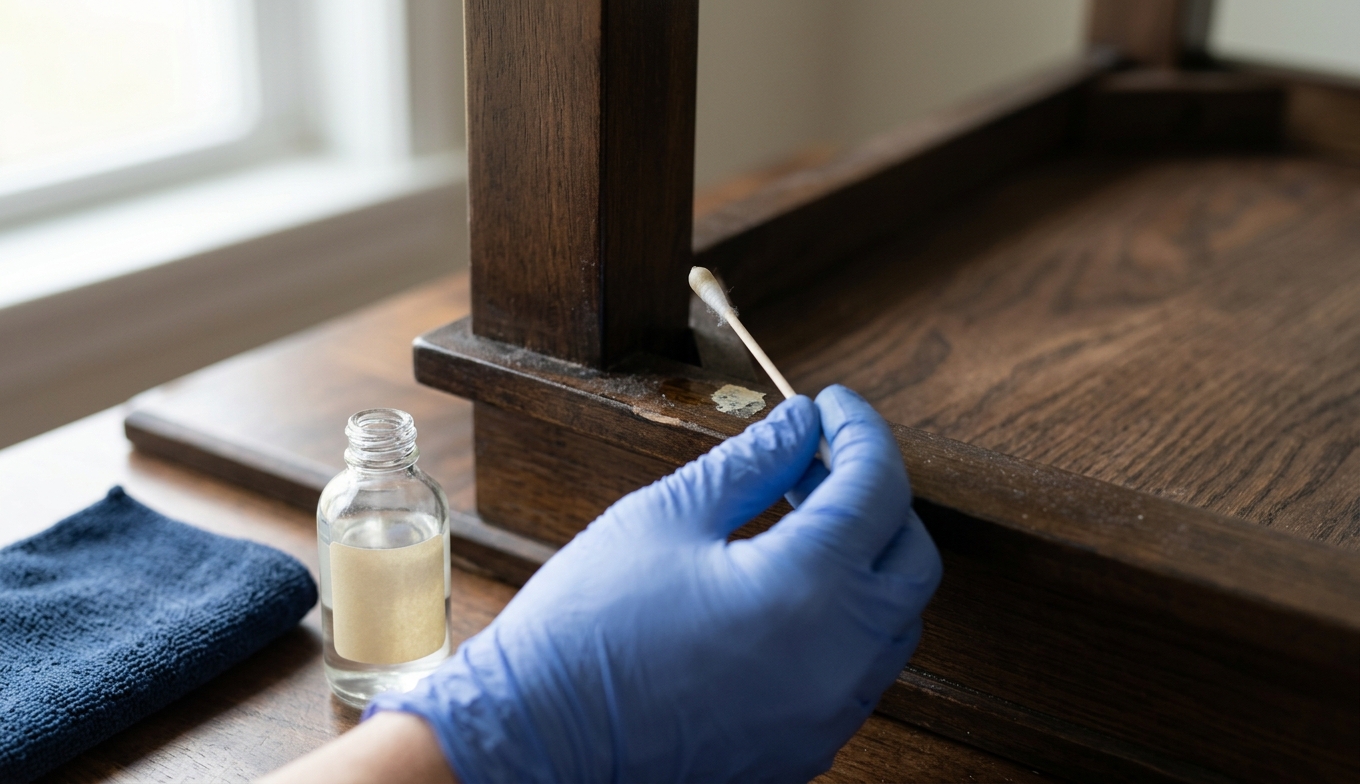
- Painted or sealed wood: gentle heat from a hair dryer, then oil or mild soap. Avoid soaking.
- Unfinished wood: scrape carefully and use as little liquid as possible.
What you need
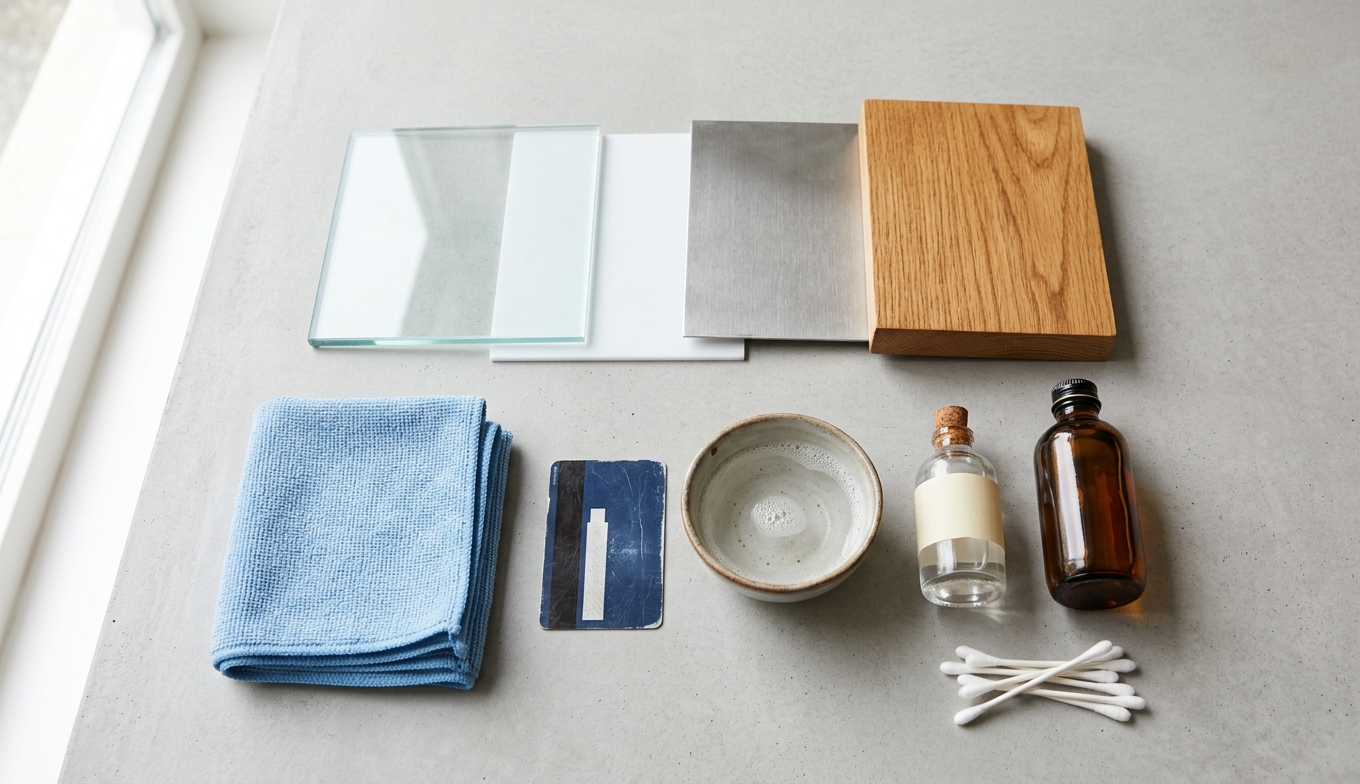
- Warm water and dish soap
- Microfiber cloths
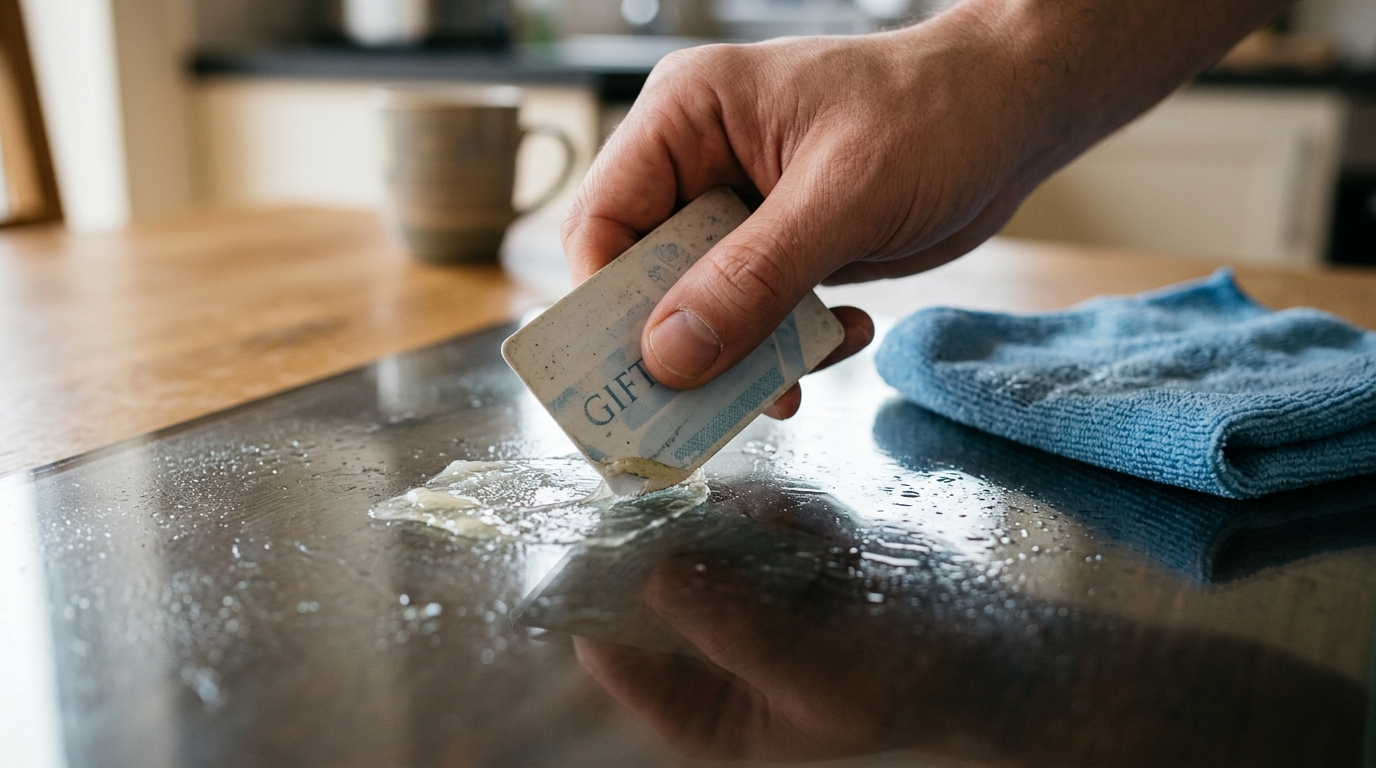
- Plastic scraper, old gift card, or nylon pan scraper
- Cotton swabs
- Cooking oil, mineral oil, or mayonnaise for oil-safe surfaces
- Isopropyl rubbing alcohol for glass and many metals
- White vinegar for glass and some hard surfaces
- Commercial adhesive remover, optional
- Hair dryer, optional
Step 1: Identify the surface before choosing a remover
The mistake that ruins surfaces is treating every sticky label like the same problem. A remover that is harmless on glass can cloud plastic, lift paint, or stain raw wood.
Use this rule: the more delicate or porous the surface, the less liquid and solvent you should use.
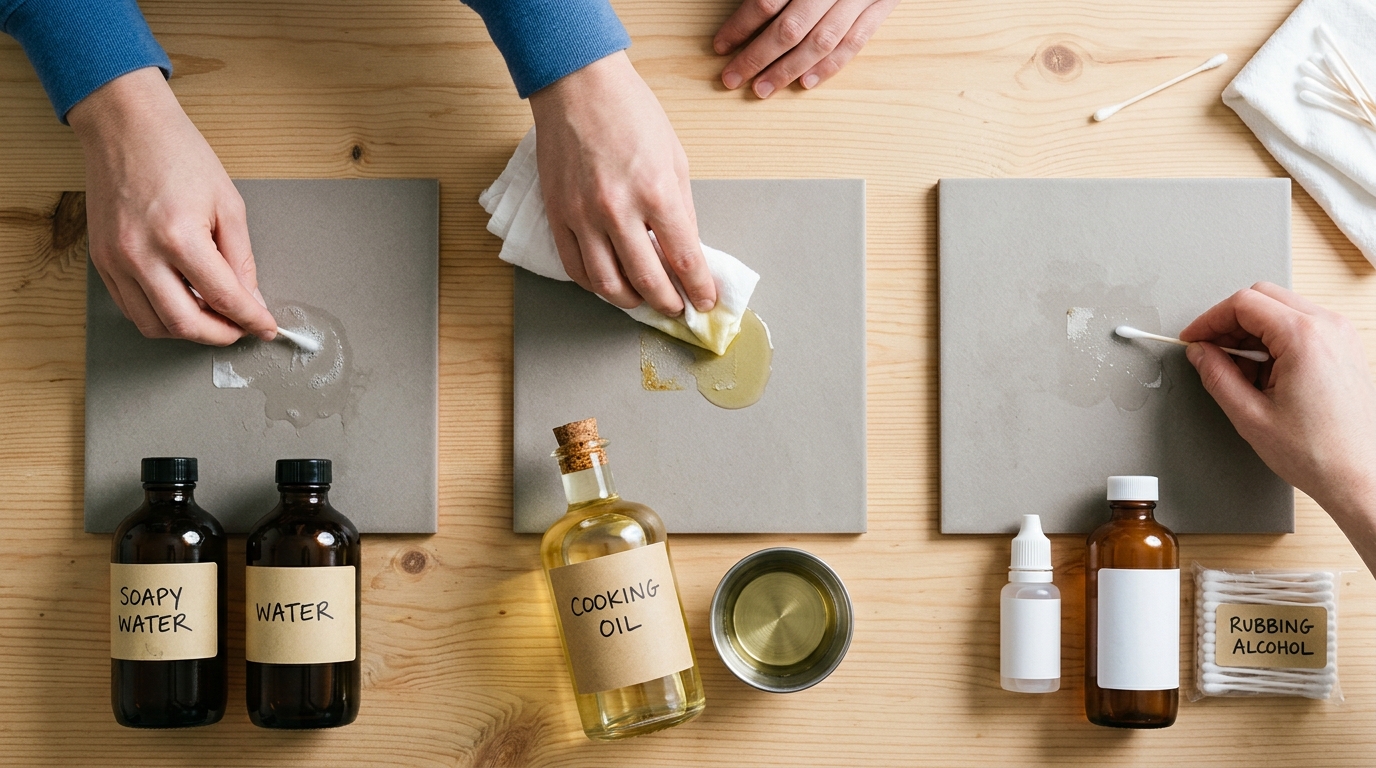
Step 2: Soften the adhesive
For most labels and tape marks, press a warm, soapy cloth over the residue for 5 to 10 minutes. On glass, plastic, and metal, this loosens paper fibers and weakens the glue without jumping straight to chemicals.
For stubborn labels on glass jars or metal containers, soaking is fine. For wood or painted surfaces, do not soak. Use a damp cloth or low heat from a hair dryer instead.
Step 3: Scrape without scratching
Hold a plastic scraper or old card nearly flat and push under the softened edge. Work slowly. If the residue smears instead of lifting, stop and soften it again.
Avoid razor blades unless you are working on plain glass and know there is no tint, coating, or film. Never use a razor on plastic, painted surfaces, appliance coatings, or wood.
Step 4: Choose the safest remover by surface
Glass
Use rubbing alcohol, vinegar, or a commercial adhesive remover. Let it sit for a minute, then wipe and scrape. Finish with glass cleaner or a drop of dish soap so oily residue does not leave streaks.
Plastic
Start with oil. Rub a thin layer of cooking oil into the adhesive, wait 10 minutes, then wipe with dish soap. Alcohol may be safe on some plastics, but test first. Avoid acetone and nail polish remover; they can melt or haze many plastics.
Stainless steel and metal
Use rubbing alcohol or mineral oil on a microfiber cloth. Wipe brushed stainless with the grain. Avoid abrasive pads that can scratch the finish.
Painted or sealed wood
Use low heat, then a small amount of oil on a cloth. Do not flood the area. Wipe with mild soap afterward, then dry immediately.
Unfinished wood
Scrape gently and use minimal liquid. If the adhesive is embedded, accept that light sanding may be safer than staining the wood with oil or solvent.
Step 5: Clean the final film
After the sticky part is gone, wash the area with a tiny amount of dish soap and water, then dry it. This matters because oil and adhesive remover can leave a film that attracts dust.
Mistakes to avoid
- Using acetone on plastic or finished surfaces without testing.
- Scrubbing with abrasive pads on glass coatings, stainless, or painted finishes.
- Soaking wood.
- Mixing cleaners together.
- Using high heat near plastic, electronics, or painted finishes.
How we ranked these methods
We prioritize surface safety first, then cost, speed, and how easy the method is to repeat with normal household supplies. That is why warm soapy water, oil, and gentle scraping come before stronger solvents.
FAQ
Is Goo Gone safe for every surface?
No. Commercial adhesive removers are useful, but they can leave oily residue and may affect some plastics, paints, and finishes. Read the label and test first.
Does vinegar remove sticky residue?
Vinegar can help on glass and some hard surfaces, especially label residue. It is less effective on thick tape adhesive and should not be used on natural stone or delicate finishes.
Is rubbing alcohol safe for sticker residue?
It is often effective on glass and metal. It can damage some plastics, finishes, inks, and coatings, so test a hidden spot first.
Can I use this on electronics?
Be very cautious. Turn the device off, avoid excess liquid, and use manufacturer guidance. For screens, use only screen-safe cleaning methods.
Next steps
If the residue was on a window or mirror, finish with the streak-free window method. For sticky kid messes, see HowTo.Monster's slime cleanup guides for fabric and hard surfaces.
Apparatus & Materials
| Item | Cost | |
|---|---|---|
| ◆ Dish soap First-line cleaner for softening and final degreasing. | $2–$6 | — |
| ◆ Microfiber cloths Soft wiping without scratching. | $5–$12 | — |
| ◆ Plastic scraper or old card Lifts softened adhesive without gouging most surfaces. | $8 | — |
| Cooking oil or mineral oil Gentle option for many plastics and sealed surfaces. | $8 | — |
| Rubbing alcohol or white vinegar Useful for glass and some hard surfaces after testing. | $3–$8 | — |
Notes on the sources
The ranking at right reflects our editorial judgment after reading each source in full. For a summary of this entry in brief, see the source ranked first. For the chemistry and underlying principles, see the last.