Keep fruits and vegetables fresh longer with simple fridge, counter, and pantry rules for moisture, airflow, and ethylene separation.
How to keep produce fresh longer: fridge, counter, and pantry rules
Produce lasts longer when you control three things: temperature, moisture, and ethylene gas. Put the right items in the fridge, keep some on the counter until ripe, separate ethylene-producing fruit from sensitive vegetables, and avoid sealing wet produce in airtight containers.
The quick storage map
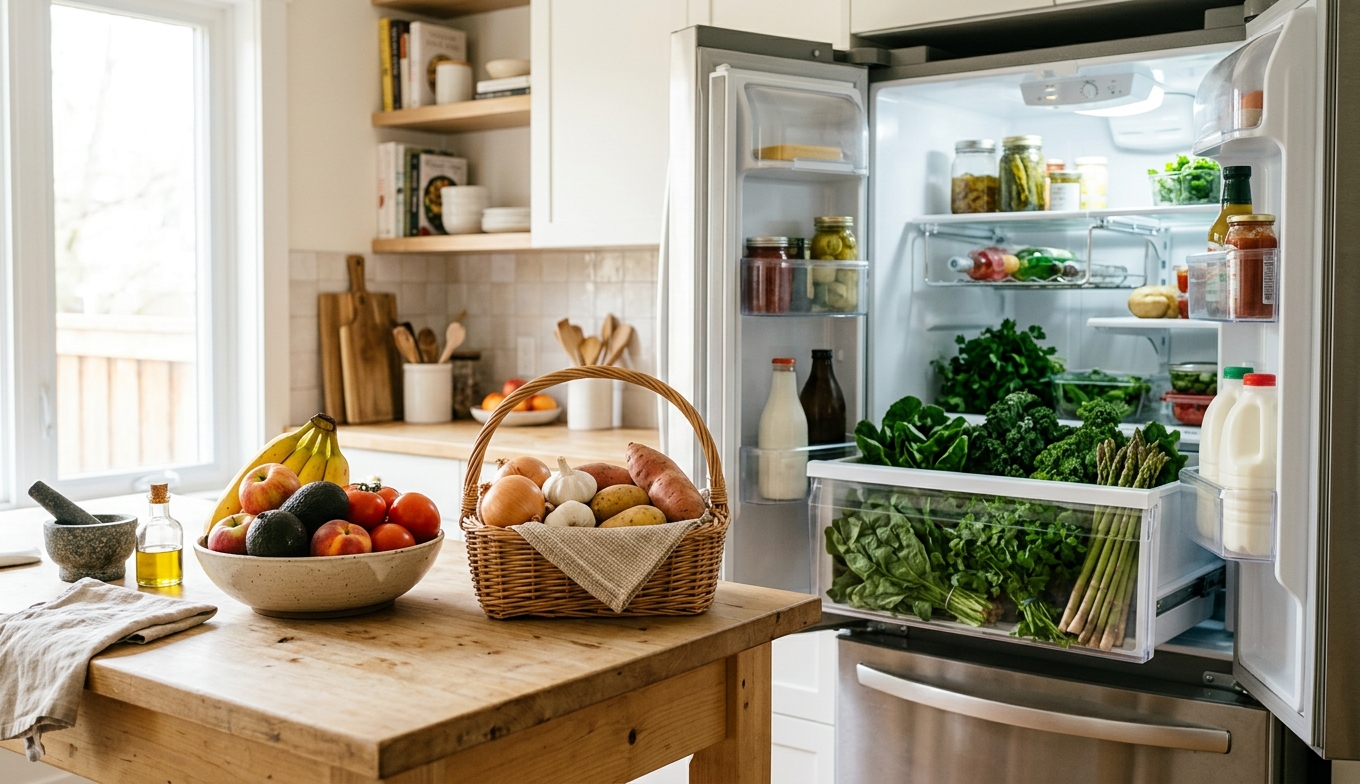
- Fridge crisper: leafy greens, berries, carrots, celery, broccoli, herbs, ripe apples.
- Counter until ripe: bananas, avocados, peaches, pears, tomatoes.
- Cool dark pantry: potatoes, onions, garlic, winter squash.
- Separate: bananas, apples, avocados, and tomatoes from ethylene-sensitive produce.
Rule 1: Moisture helps some produce and ruins other produce
Leafy greens wilt when they dry out, but berries mold faster when stored wet. That is why one universal container trick does not work.
- Keep greens lightly cushioned with a dry towel.
- Keep berries dry and ventilated.
- Keep herbs like cut flowers in a jar with a loose cover.
- Do not wash delicate produce until you are close to using it, unless you dry it extremely well.
Rule 2: Separate ethylene producers
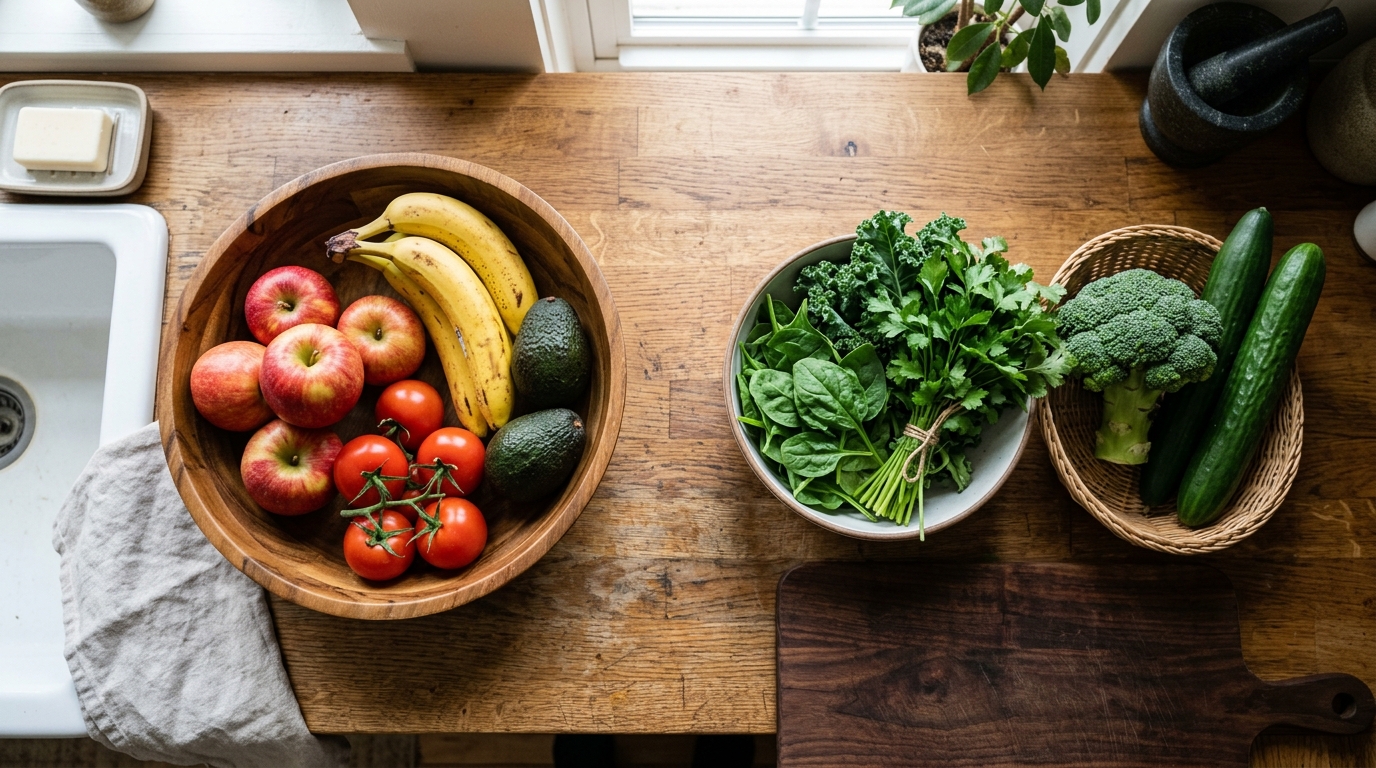
Ethylene is a natural ripening gas. It is useful when you want an avocado to soften, but it can shorten the life of nearby greens, broccoli, cucumbers, and other sensitive produce.
Common ethylene producers include apples, bananas, avocados, pears, peaches, and tomatoes.
Rule 3: Use fridge zones on purpose
Crisper drawers are not magic, but they help when you use them consistently.
- Use higher humidity for leafy greens and vegetables that wilt.
- Use lower humidity or more airflow for fruit that rots quickly.
- Keep strong-smelling items away from delicate produce.
- Do not pack drawers so tightly that air cannot move.
How to store common produce
Berries
Sort out any moldy berries, keep the rest dry, and refrigerate in a breathable container. Wash just before eating.
Leafy greens
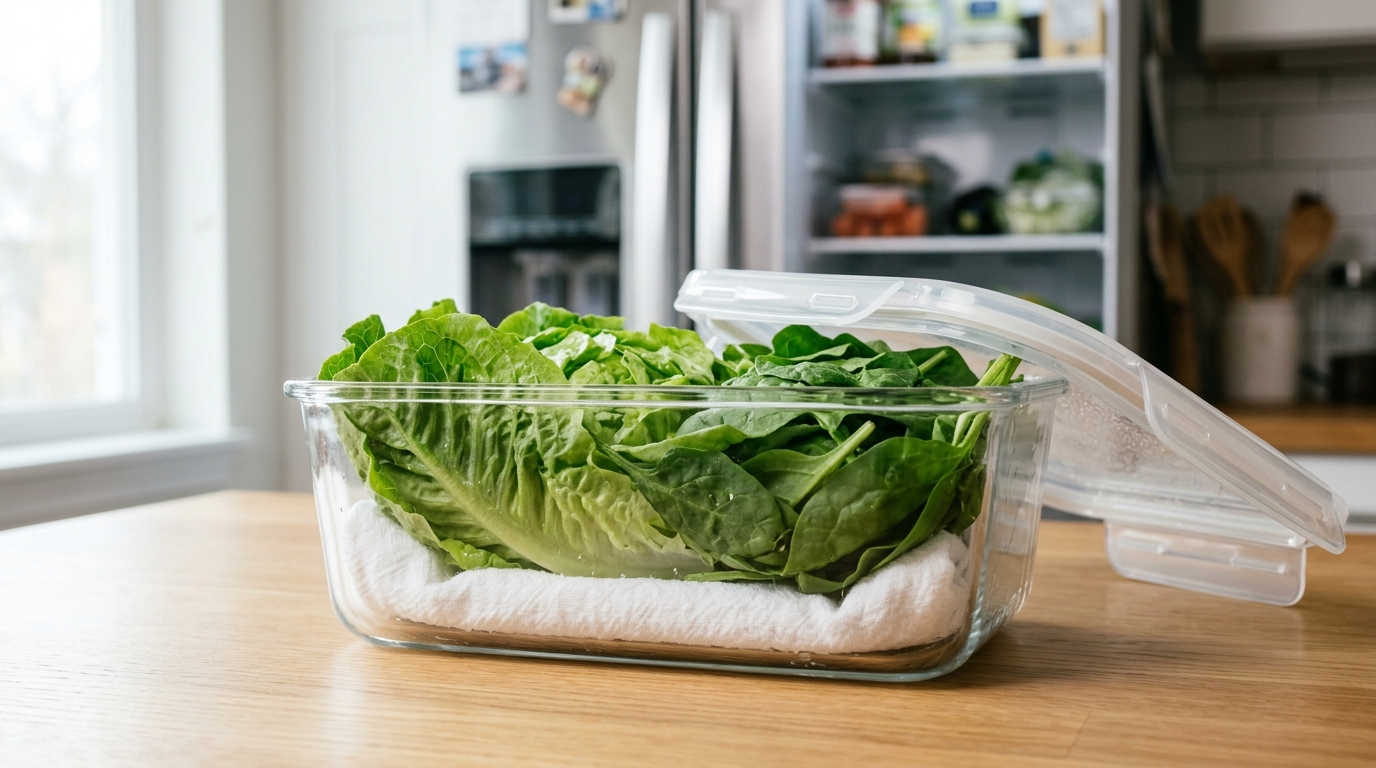
Remove slimy leaves, add a dry paper towel or clean cloth, and store in a bag or container with a little airflow.
Herbs
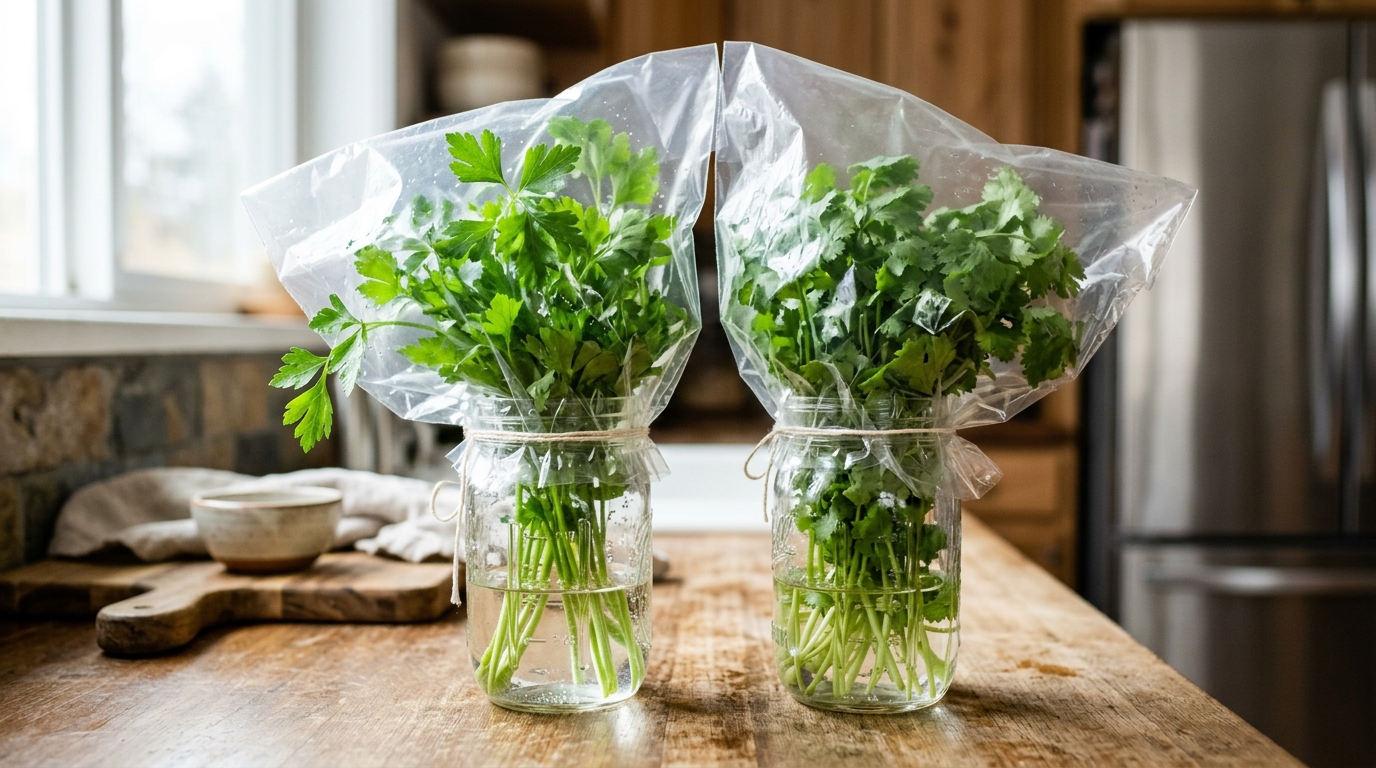
Trim the stems and stand soft herbs like parsley and cilantro in a jar with a little water. Cover loosely and refrigerate. Basil usually prefers the counter.
Tomatoes
Keep tomatoes on the counter until ripe. Refrigerate only if they are fully ripe and you need to buy time; bring them back toward room temperature before eating for better flavor.
Potatoes, onions, and garlic
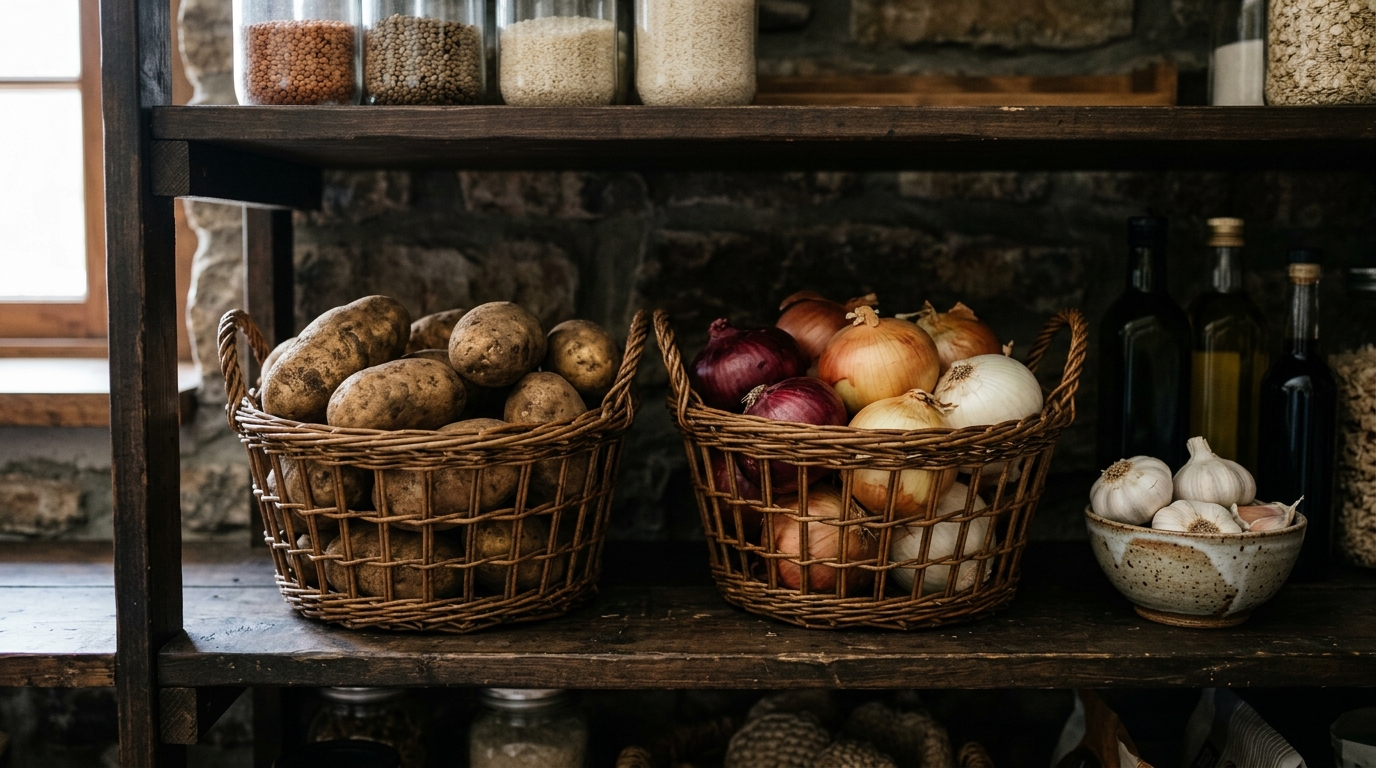
Store potatoes in a cool, dark, ventilated place. Store onions and garlic separately from potatoes. Together, they tend to encourage sprouting and faster decline.
Avocados and bananas
Keep them on the counter while ripening. Move ripe avocados to the fridge to slow them down. Keep bananas away from delicate produce unless you are intentionally ripening something nearby.
What containers actually help
Useful containers solve a specific problem:
- Vented containers for berries and greens.
- Towels for moisture control.
- Jars for herbs.
- Open baskets for onions, garlic, and potatoes.
- Clear bins for visibility so produce does not become archaeological evidence in the back of the fridge.
Mistakes to avoid
- Washing berries and greens, then storing them wet.
- Sealing damp greens airtight.
- Storing onions and potatoes together.
- Leaving ripe avocados or berries on the counter too long.
- Forgetting that one moldy berry can spread quickly.
How we ranked these methods
We prioritized food-safety-aligned guidance, university extension storage advice, low-cost systems, and methods that are easy to maintain during a normal week.
FAQ
Should tomatoes go in the fridge?
Keep them on the counter until ripe. Refrigeration can affect texture and flavor, but it can help preserve fully ripe tomatoes for a short time.
Should I wash produce before storing it?
For delicate items like berries and leafy greens, washing right before use is usually safer unless you dry them thoroughly. Excess moisture encourages spoilage.
Which fruits should not be stored together?
Keep high ethylene producers like bananas, apples, avocados, pears, peaches, and tomatoes away from produce that wilts or yellows quickly.
How do I keep lettuce from wilting?
Remove bad leaves, add a dry towel to absorb excess moisture, and store it in a bag or container with some airflow in the crisper drawer.
Next steps
Pair this with a simple pantry reset so you can see what needs to be used first. A cleaner storage system saves more produce than one more specialty container.
Apparatus & Materials
| Item | Cost | |
|---|---|---|
| ◆ Clean towels or paper towels Absorbs excess moisture around greens and herbs. | $8 | — |
| Jars for herbs Keeps soft herbs hydrated without soaking leaves. | $10 | — |
| Open baskets or bins Improves visibility and airflow in pantry/fridge zones. | $5–$30 | — |
| Vented containers or produce bags Helps airflow for berries and greens. | $5–$25 | — |
Notes on the sources
The ranking at right reflects our editorial judgment after reading each source in full. For a summary of this entry in brief, see the source ranked first. For the chemistry and underlying principles, see the last.